Services > Balance of System > Racking
Racking Engineering & Field Testing Services
Have a Question or Need Assistance?
Find out why your solar racking is failing, moving, corroding, or damaging other components.
Intertek CEA investigates structural and tracker problems from the foundation to the module. We combine field inspection, engineering analysis, testing, and design review to determine the cause, extent, and significance of an issue and help you decide what to do next.
What problem are you seeing?
Structural Failures
A racking component has failed or broken
A failed bearing, torque tube, weld, pile, or connection may be the visible symptom of a wider problem. Intertek CEA investigates the failure, its structural significance, and whether similar components elsewhere on the site may also be affected.
How we can help
- Inspect the failed component and surrounding structure
- Review drawings, calculations, specifications, and installation records
- Use dimensional, non-destructive, or materials testing where needed
- Assess whether the issue is isolated or potentially systemic
- Support repair, replacement, monitoring, or further testing decisions
Geometry & Alignment
The structure is twisted or misaligned
Tracker twist, pile misalignment, abnormal movement, and poor connection fit-up can affect operation and transfer unintended loads through the structure. We measure the system against drawings and tolerances to determine where the deviation starts and what may be causing it.
How we can help
- Measure tracker, torque tube, pile, and connection alignment
- Check twist, plumb, clearances, connection fit-up, and dimensional tolerances
- Assess movement between bearings, torque tubes, and other components
- Check fastener torque, torque markings, and installation condition
- Compare installed conditions with drawings and manufacturer requirements
- Identify likely design, manufacturing, or installation contributors
Corrosion & Durability
Corrosion is appearing
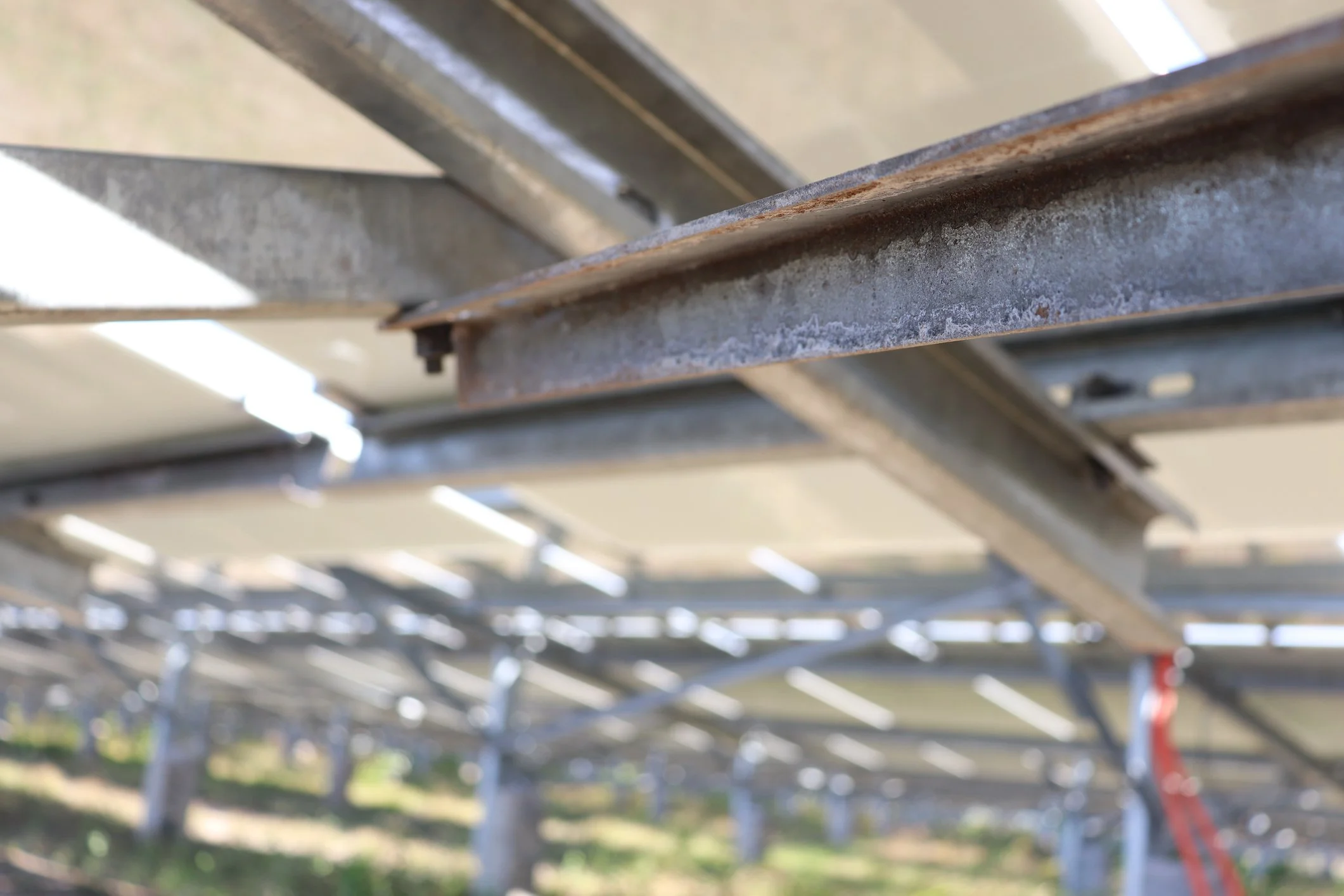
Visible rust does not automatically mean a structural component is unsafe. Intertek CEA assesses the severity, cause, and likely progression of corrosion so you can distinguish superficial deterioration from conditions that may affect structural life.
How we can help
- Inspect corrosion on piles, fasteners, torque tubes, welds, and other steel components
- Measure coating or galvanization thickness
- Assess coating damage caused during transport or installation
- Verify material composition where needed
- Evaluate moisture, drainage, and environmental contributors
- Develop monitoring or remediation recommendations
Foundations & Site Conditions
Piles or foundations are moving
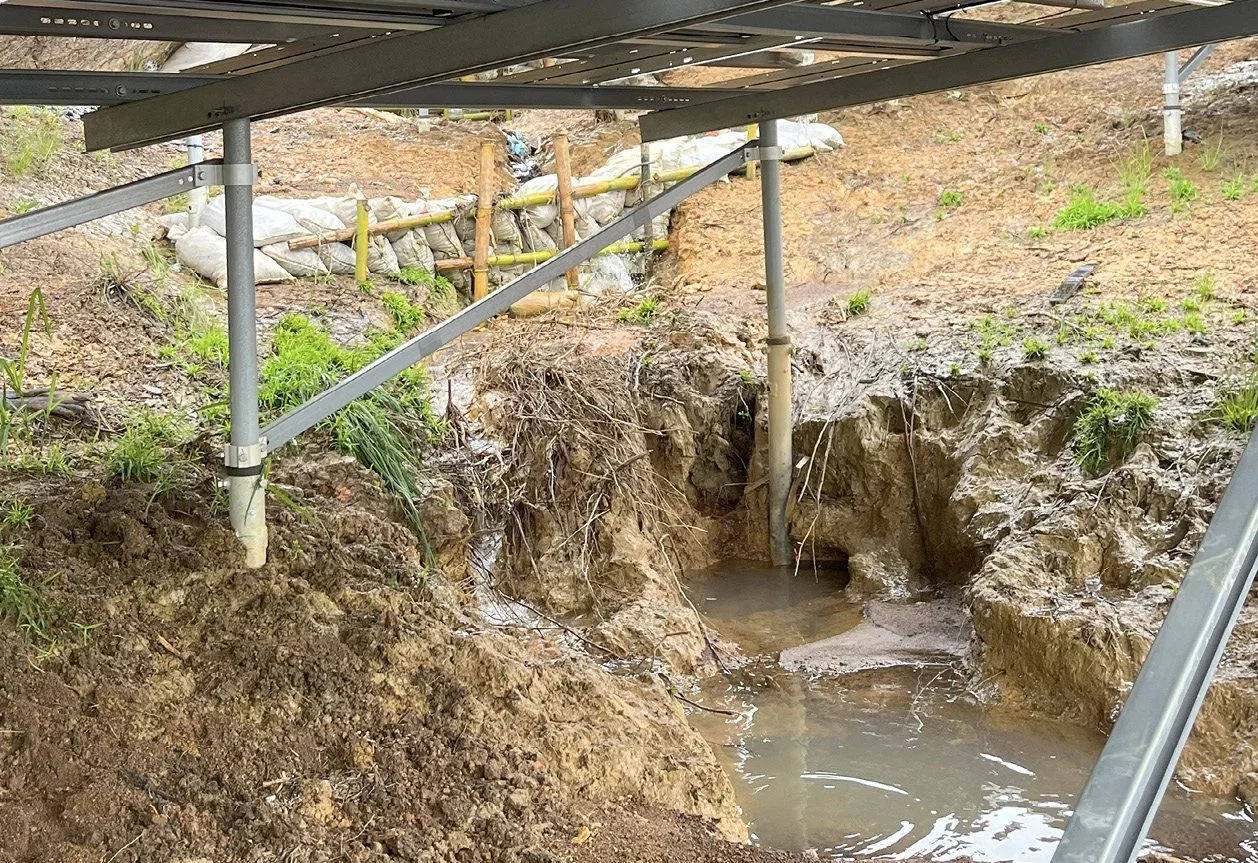
Movement at the foundation can distort an entire tracker row. Intertek CEA investigates pile position, embedment, soil conditions, frost, drainage, and grading to determine how site conditions are affecting the structure above.
How we can help
- Assess pile movement, tilt, twist, and embedment
- Measure structural distortion across affected rows
- Review geotechnical assumptions and foundation design
- Investigate frost heave and frost jacking
- Assess standing water, drainage, grading, and moisture conditions
- Quantify potential performance impacts of structural distortion where relevant
- Evaluate targeted pile reset, grading, drainage, or monitoring options
Module-Racking Interaction
Modules are breaking or being stressed
Module damage can originate outside the module itself. Excessive structural deflection, poor alignment, twisted torque tubes, or installation stress can introduce unintended mechanical stress into modules and may contribute to module twist, deformation, or glass breakage.
How we can help
- Inspect module damage patterns and mounting conditions
- Measure racking alignment and structural deflection
- Review module-to-racking geometry and connection conditions
- Assess torque tube stiffness and serviceability
- Review environmental loading and tracker operating conditions
- Determine whether the structure may be contributing to module damage
Design & Installation Review
The design or installation may be the problem
When field conditions do not match expectations, the cause may lie in the calculations, drawings, supplied components, installation, or a combination of these. Intertek CEA compares the engineering basis with what was actually built.
How we can help
- Review structural calculations and applicable design criteria
- Check wind, snow, seismic, gravity, and combined loading assumptions
- Assess member strength and serviceability
- Compare stamped drawings with as-built conditions
- Identify component differences, undocumented changes, installation deviations, or dimensional inconsistencies
- Review tracker operation and wind/snow stow assumptions where they affect structural loading
- Evaluate retrofit, reinforcement, replacement, or further engineering needs

Not sure what is causing the problem?
Tell us what you are seeing. Our engineering team can help determine the right next step.
Latest Racking Insights