By Scott Azevedo
This article was originally published in pv magazine - November 2026 Edition
Every recycler can show their customers or auditors a certificate confirming a load of modules have reached their facility. What that certificate cannot do is say what happened to the material next, and where it ended up. Scott Azevedo of Intertek CEA sees that as the real risk for anyone trying to back up a circularity claim. A certificate proves arrival, but not the outcome. For a developer, those are two very different things to defend to a lender or regulator.
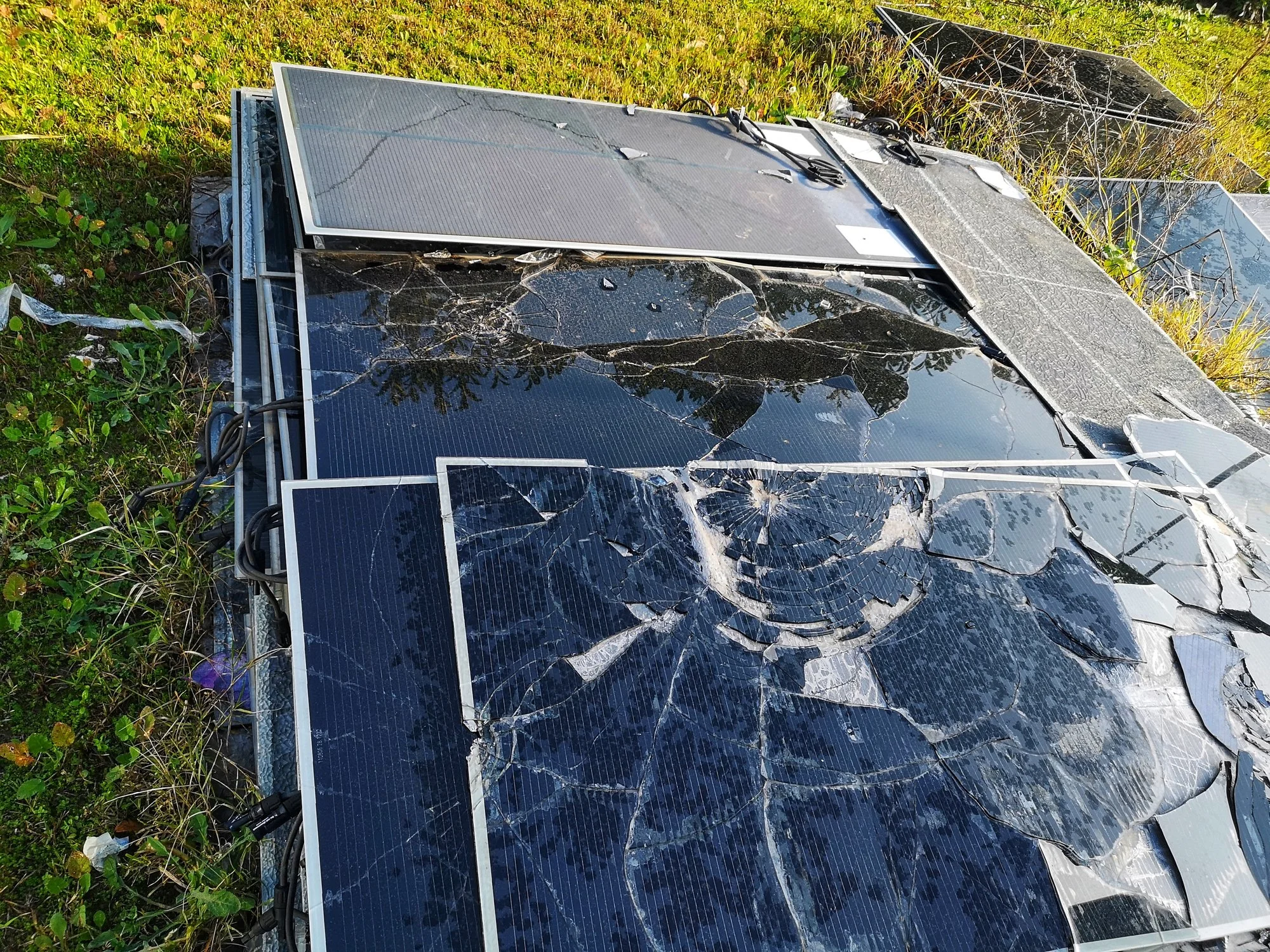
Developers need to ask a very specific set of questions of solar module recyclers to ensure quality lasts beyond audit day.
A PV module recycler’s core job is what’s called mass balance, or tracking weight in against weight out. On a well-run line, recovery rates for glass, aluminum, and copper each run close to 99%; silicon typically comes in closer to 90%. Whatever doesn’t come out as one of those tracked material streams counts as residual waste.
On a crystalline-silicon module, glass alone makes up roughly 70% of the weight, so how a recycler handles that one material does more to determine the real recovery rate than anything else in the process.
Independent verification goes beyond confirming that those weights reconcile. It evaluates whether the recycler has the documented controls, records, and operational practices necessary to demonstrate that the reported recovery rates are accurate, repeatable, and defensible. Mass balance on its own only tells you that something came out the other end.
Traceability limits
Recyclers generally do a good job tracking material at the front end. When modules from a specific project arrive, a good recycler logs how much came in, what it weighed and what it’s made of. Ask a recycler how much of a given developer’s shipment got processed, and a well-run facility can usually tell you.
That tracking stops at the point of resale. Once glass, copper, and silver get separated out, they get pooled with material from other clients before going to a buyer. There’s no way to reconstruct, after the fact, that a specific pallet of a specific developer’s modules ended up in a specific buyer’s hands. It’s simply too granular a level of detail for how commodities get sold.
Independent verification routinely shows up recyclers with very different levels of operational maturity. At Intertek CEA we’ve walked into operations with exceptional controls, documentation, and traceability, and seen others with real gaps. Yet both can hand a developer the same certificate and make similar claims to customers.
Anyone can say they have traceability. No independent party has verified it. Without an independent check, there’s no way to know how accurate the claim is, and once a truck leaves the recycler’s lot, there’s no check and balance on any of it.
Recycler accountability
Tracing a shipment all the way to its final buyer isn’t a realistic ask, and it’s not actually the question that matters. The question that matters is simpler: What did the recycler recover, how much of it, and at what quality? That’s the part of the process a recycler fully controls and can document before the material gets pooled and resold, and long before it’s out of anyone’s hands to verify.
Getting a good answer to that question doesn’t require one company to control every step of the chain. A recycler that sells its recovered glass or metal to someone else who does the further refining hasn’t fallen short of the goal. The goal is keeping material out of the ground, and any buyer who takes recovered output and puts it to good use is part of getting there.
Recovered metals are sometimes shipped to offshore smelting operations, refined into copper, silver, and other metal bars. In the United States, at least one module manufacturer has signed a multi-year deal to buy recycled solar glass and put it back into new panels.
Different destinations, same outcome: material that didn’t get landfilled. The company doing the refining doesn’t matter. Whether it happened at all does.
Triple threat
More financiers, tax-equity investors, and infrastructure funds are beginning to ask developers directly what happens to their assets at end of life. And some are pulling back financing when the answer isn’t backed by anything that can be given concrete answers.
Answering these questions is becoming more important as more modules hit the recycling stream. End-of-life PV volume in the United States is on track to roughly triple by 2030 and keep climbing through the following decade, according to modeling from the International Renewable Energy Agency (IRENA) and the International Energy Agency’s Photovoltaic Power Systems Programme (IEA-PVPS).
While the US regulatory framework addresses waste management obligations, it does not establish a comprehensive technical framework for responsible PV recycling, material accountability, mass balance, traceability, and chain of custody.
The European Union is further along. Its Waste Shipment Regulation, in force since 2024, already requires digitized, traceable documentation for waste shipments, PV included. The US solar industry itself is starting to close part of this gap. The Solar Energy Industries Association (SEIA) has drafted standards out for comment that would set minimum requirements for recyclers and end-of-life management. None of that changes what a developer can do today. You don’t need a new standard to start asking better questions.
Before signing with a recycler, developers need to ask for a plain-language description of what actually happens to a pallet of modules once it arrives, what comes off first, what gets separated, what happens to the rest. Ask for their recovered quantities and the grade (how pure or clean it is) of what they recover. And write reporting requirements into the contract itself, so you’re not relying on a one-page certificate to stand in for evidence.
None of this is complicated. It just requires asking the recycler to show their work. Marketing materials and a certificate of receipt don’t answer those questions. Objective evidence does.
A standard audit confirms that a recycler followed its own procedures on a given day. Independent verification tests whether the documented controls behind those numbers hold up over time.
Scott Azevedo is a supply chain and logistics executive with more than 25 years of experience in procurement, distribution, and operations, including 12 years in the US solar industry. He has held strategic leadership roles in residential solar installation, including positions at Vivint Solar and Sunrun. At Intertek CEA, Azevedo leads PV recycling and verification programs centered on operational performance, traceability, mass balance, and certification readiness.