
The Ramp-Up Months That Decide Whether a New Solar Factory Can Deliver
By Jordan Wilson
This article was originally published in PV Tech.
New solar factories face elevated quality risks during ramp-up as new staff, equipment, and production pressure increase defects. Intertek CEA’s Jordan Wilson explains how early audits and production monitoring can help buyers manage these risks.
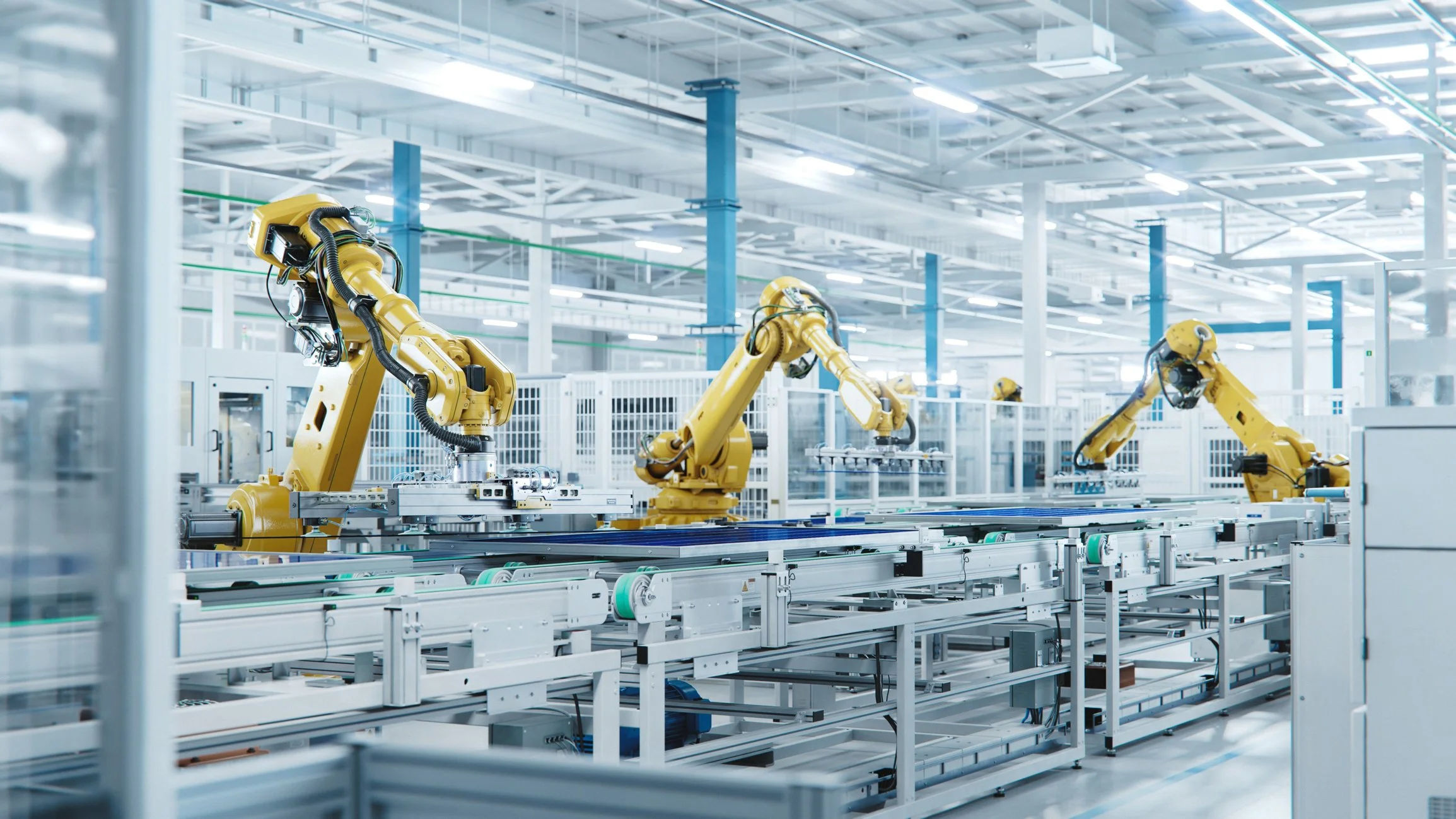
Higher rework rates and lower module production yield rates are more common during new factory ramp-up and capacity expansion, while established suppliers hold steady, Intertek CEA’s audits have revealed.
New solar factories run into trouble on a schedule. Not at the ribbon-cutting, and not in the sales pitch. The trouble shows up months into production, before workers have learned the line and new equipment has been dialled in.
Last year, more than 70% of the factories we audited scored in our bottom two tiers. None reached the top grade. A buyer signing a contract today has no way to see any of that yet.
Before the first panel ships
When a manufacturer says production starts next month, any buyer should ask three questions before signing a supply agreement.
Will the manufacturer accept a third-party factory audit before ramp-up starts? A “yes” signals they expect to pass. A “no” or a stall deserves much more attention. It often means the manufacturer isn’t ready for the ongoing scrutiny a new factory needs, whatever the reason.
What happens to this order if the line hits a snag? A manufacturer with a real answer — another facility, another supplier lined up — has thought through its own risk. A manufacturer without one has no real plan for it.
Who trains the people running the line, and how? A visit to the factory floor answers this better than a slide deck ever will.
The answers to those three questions predict more about ramp-up than the rest of the pitch combined.
Read the full article here.
Jordan Wilson is director of business development, Intertek CEA.
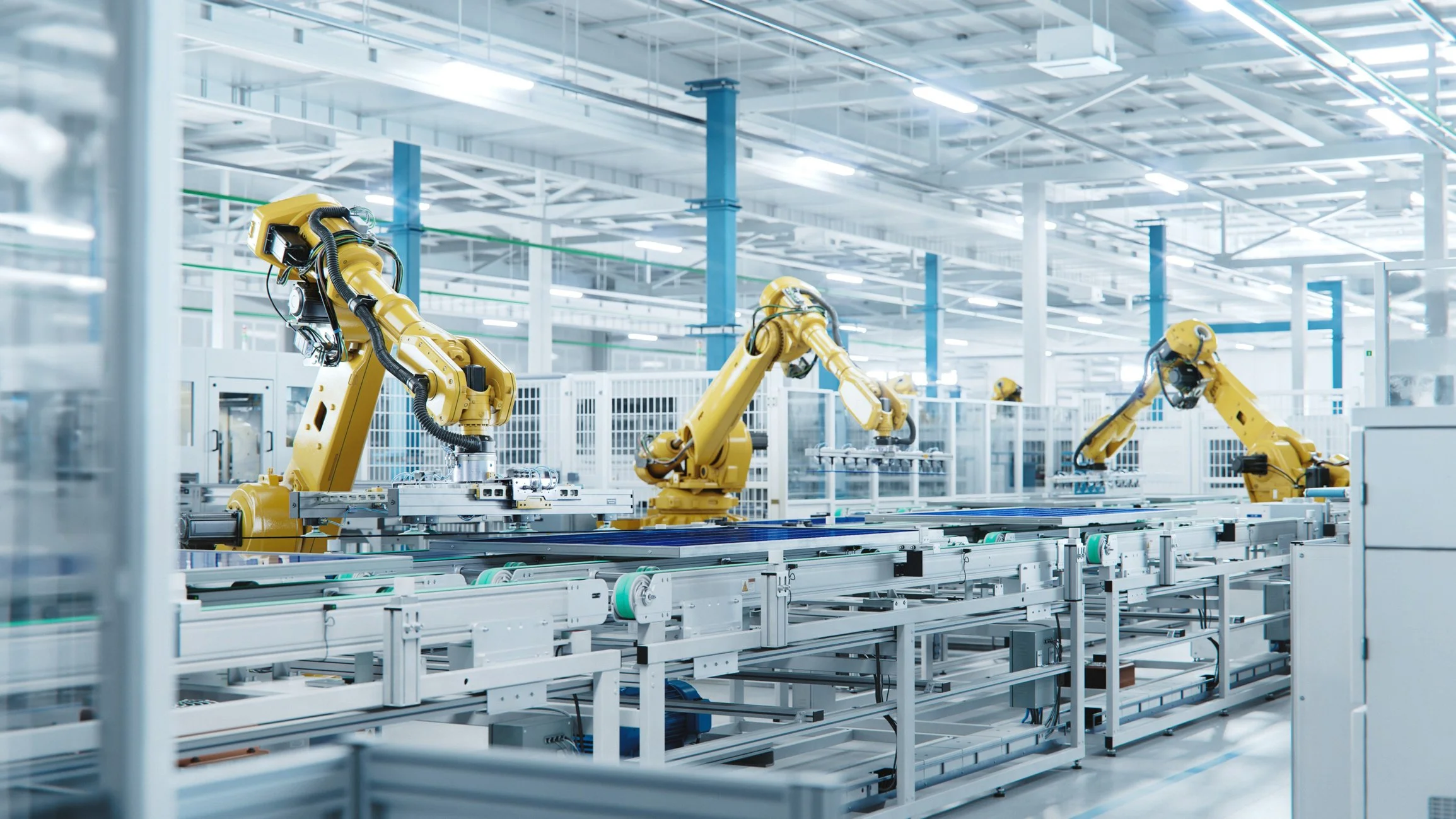
PV Tech: New solar factories face elevated quality risks during ramp-up as new staff, equipment, and production pressure increase defects. Intertek CEA’s Jordan Wilson explains how early audits and production monitoring can help buyers manage these risks.
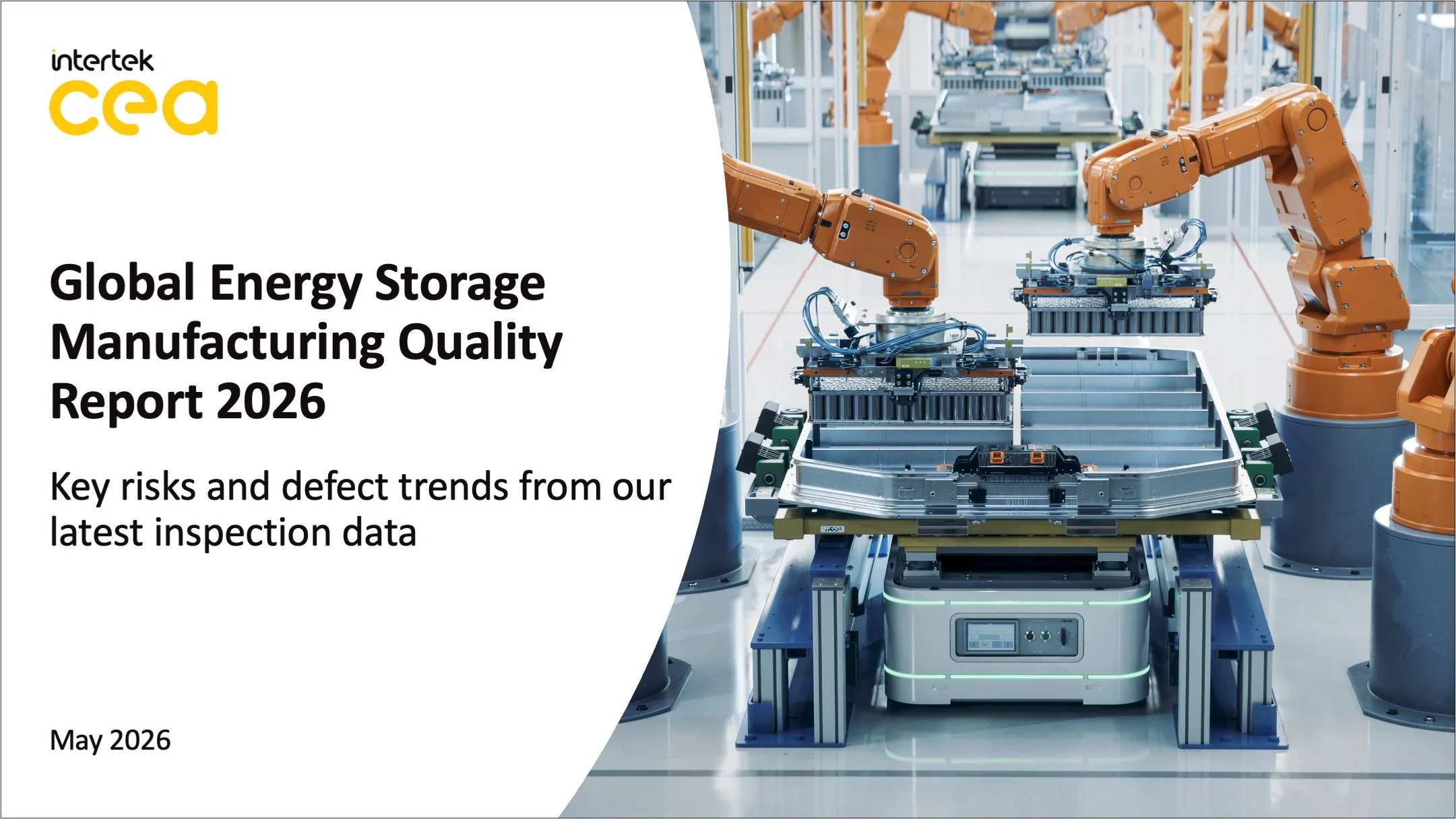
Intertek CEA conducted quality audits at more than 90 Energy Storage System (ESS) factories worldwide. Our data shows that in 2025, more than 1 in 8 inspected ESS units had safety-critical issues relating to the battery management system, thermal management, or water ingress.
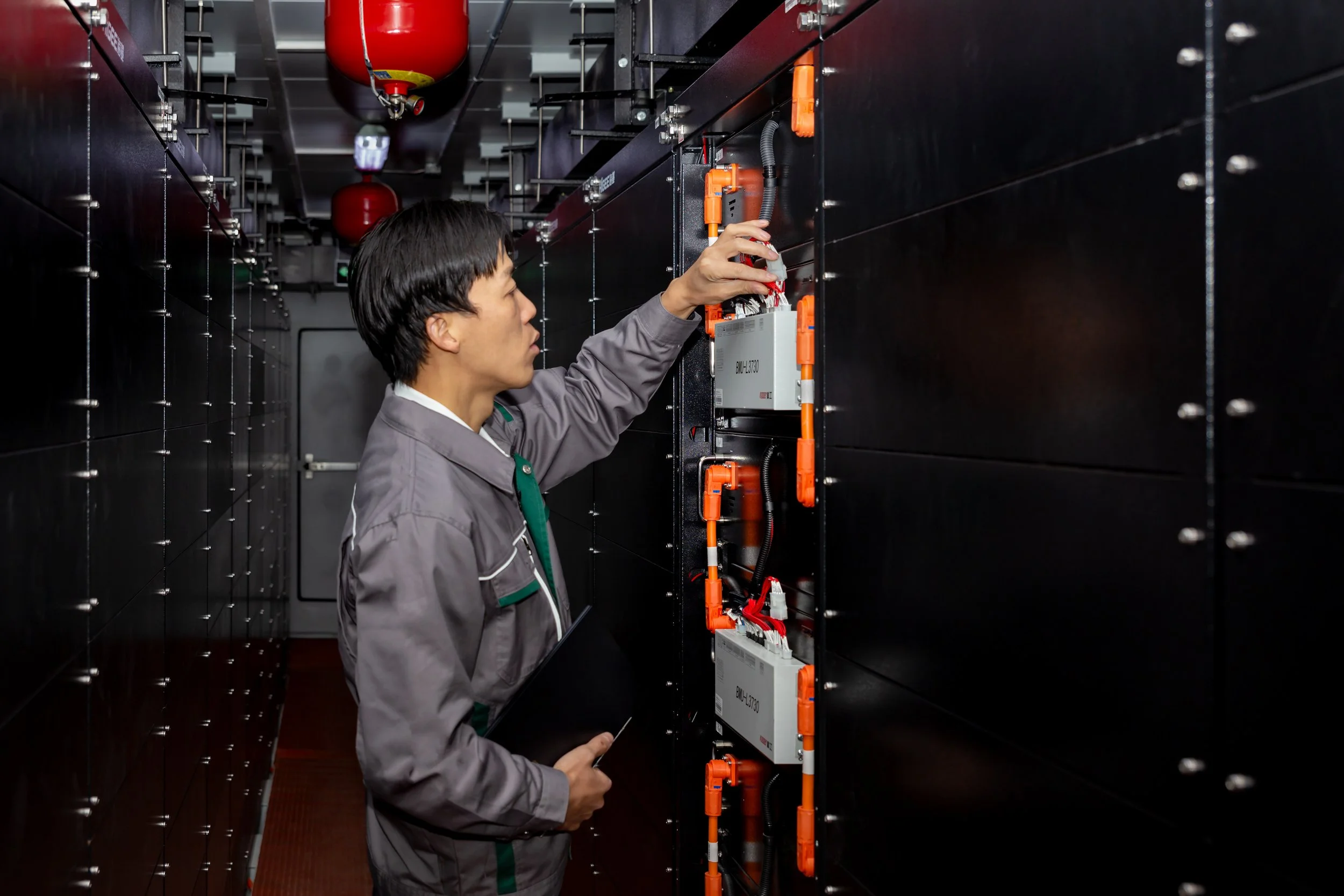
Energy Storage News: BESS safety issues become all too visible when it’s already too late, but a considered approach through the full lifecycle can mitigate these and many other risks, writes Sunny Rai from Intertek.
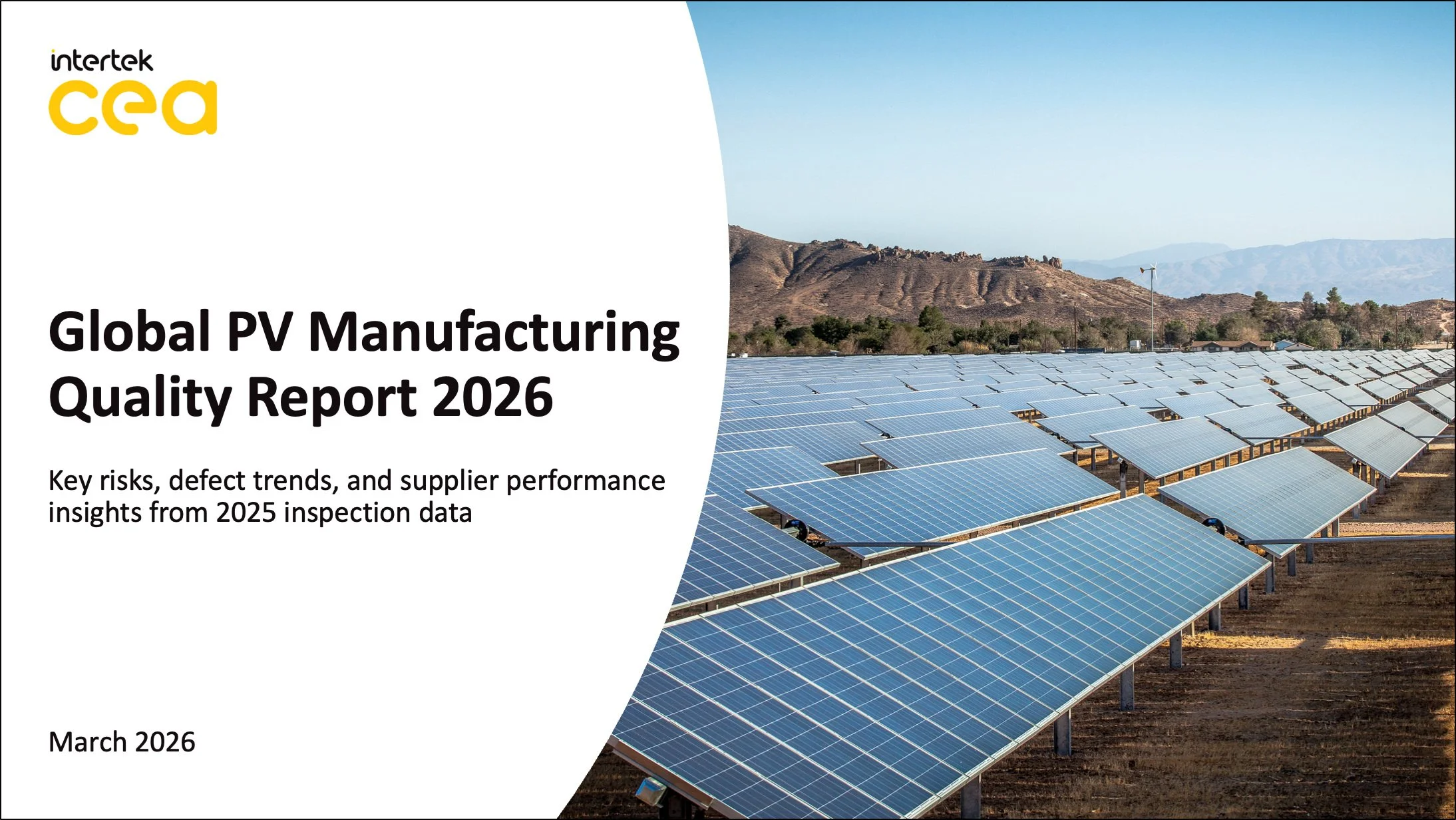
Over the past nine years, Intertek CEA has conducted more than 80,000 quality inspections in over 340 PV module factories. This report summarizes our 2025 data, which reveals rising soldering defect rates and emerging reliability risks as the industry shifts toward n-type products.

In this pv magazine Week Europe webinar, Jörg Althaus, Intertek CEA’s Director of Engineering Services & Quality Assurance, provides insights into the most common quality issues impacting PV plants today and outlines strategies to mitigate these risks.
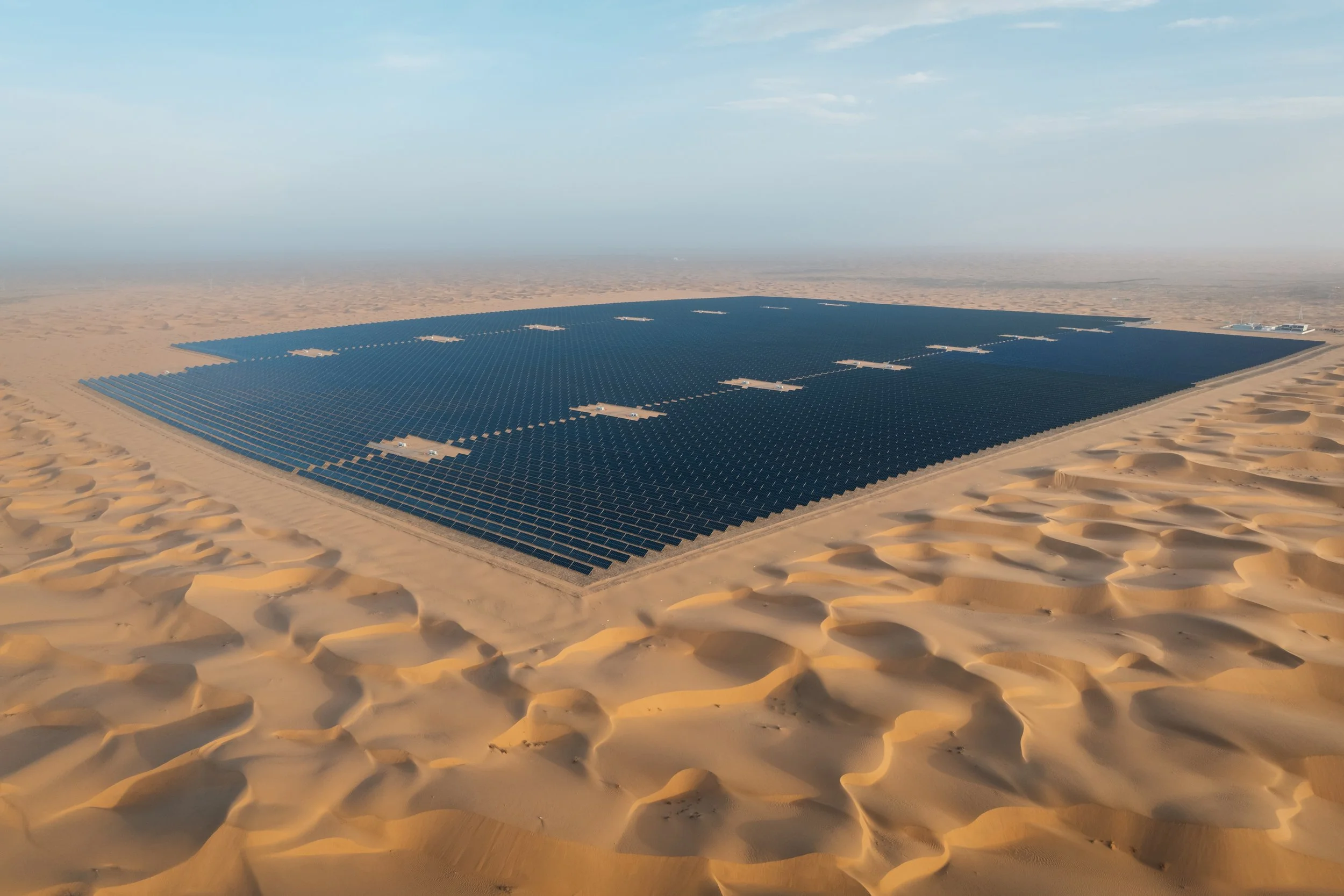
pv magazine: Jörg Althaus and Huatian Xu detail how the Middle East’s rapid solar expansion is shaped by both aggressive local-content industrial policies and the region’s uniquely harsh desert conditions.
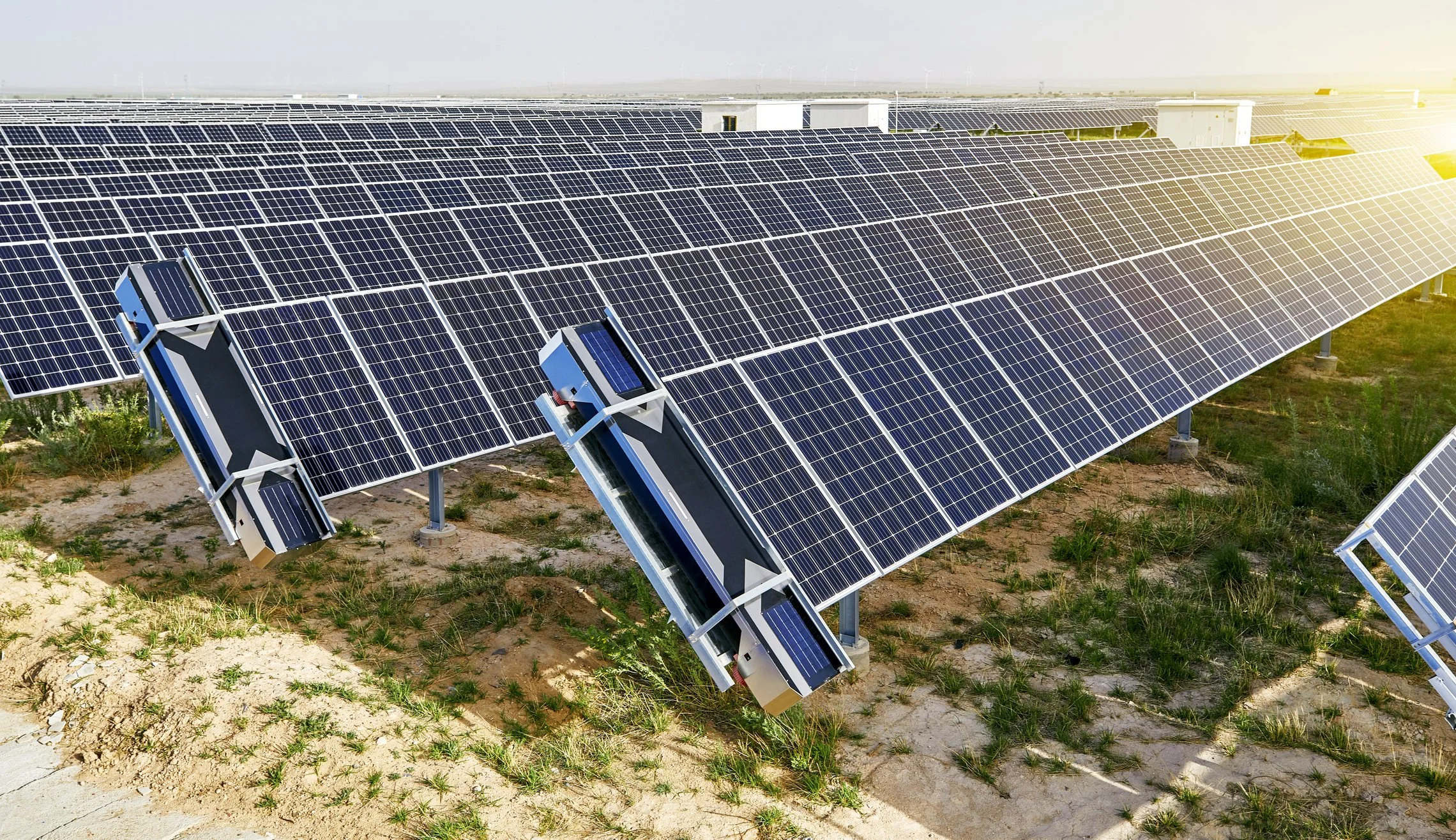
Case Study: Intertek CEA identified a hidden mismatch between the design documents and the factory-assembled tracker + cleaning robot system before it could impact the project. Catching it early helped the client avoid delays, rework, and long-term performance risk.

pv magazine: Jeff Zwijack, Intertek CEA’s Senior Manager for Energy Storage, explains how tariffs are driving a shift to U.S. battery integration. He notes that while local assembly scales quickly, it introduces human variability requiring strict oversight.
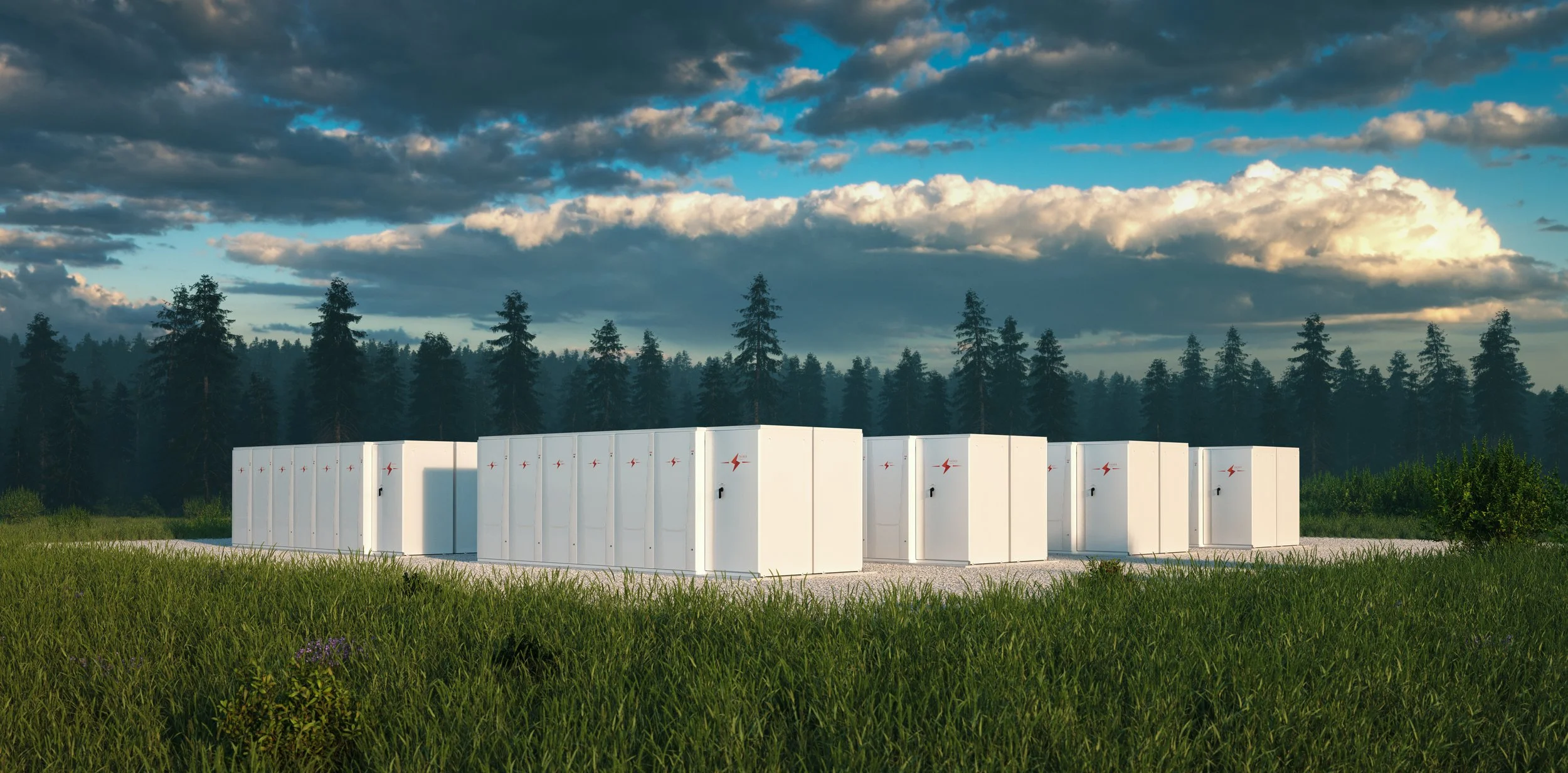
MESIA's Report 2025: Jeff Zwijack, Associate Director of Energy Storage at Intertek CEA, explains that most defects in battery energy storage systems arise during system-level integration rather than cell or module production.

Case Study: Intertek CEA’s audit prevents defective battery cabinets from reaching a project site and exposes the supplier’s resale of unsafe equipment. The case underscores the importance of independent quality oversight.

Intertek CEA conducted quality audits at 70+ battery energy storage factories worldwide. Our data shows that in 2024 the vast majority of identified quality issues were at the system level.

This pv magazine webinar addresses the quality risks U.S. solar module buyers face due to increased warehousing and the emergence of new manufacturing facilities. Experts from Clean Energy Associates (CEA) will discuss the rise in warehoused modules, common storage-related risks, quality concerns in new manufacturing environments, and strategies to mitigate these issues

In this pv magazine article, George Touloupas, CEA’s Senior Director for Technology and Quality, reviews the quality assurance (QA) activity and methodologies used to ensure PV performance and emphasizes the importance of data-driven approaches and continuous monitoring.
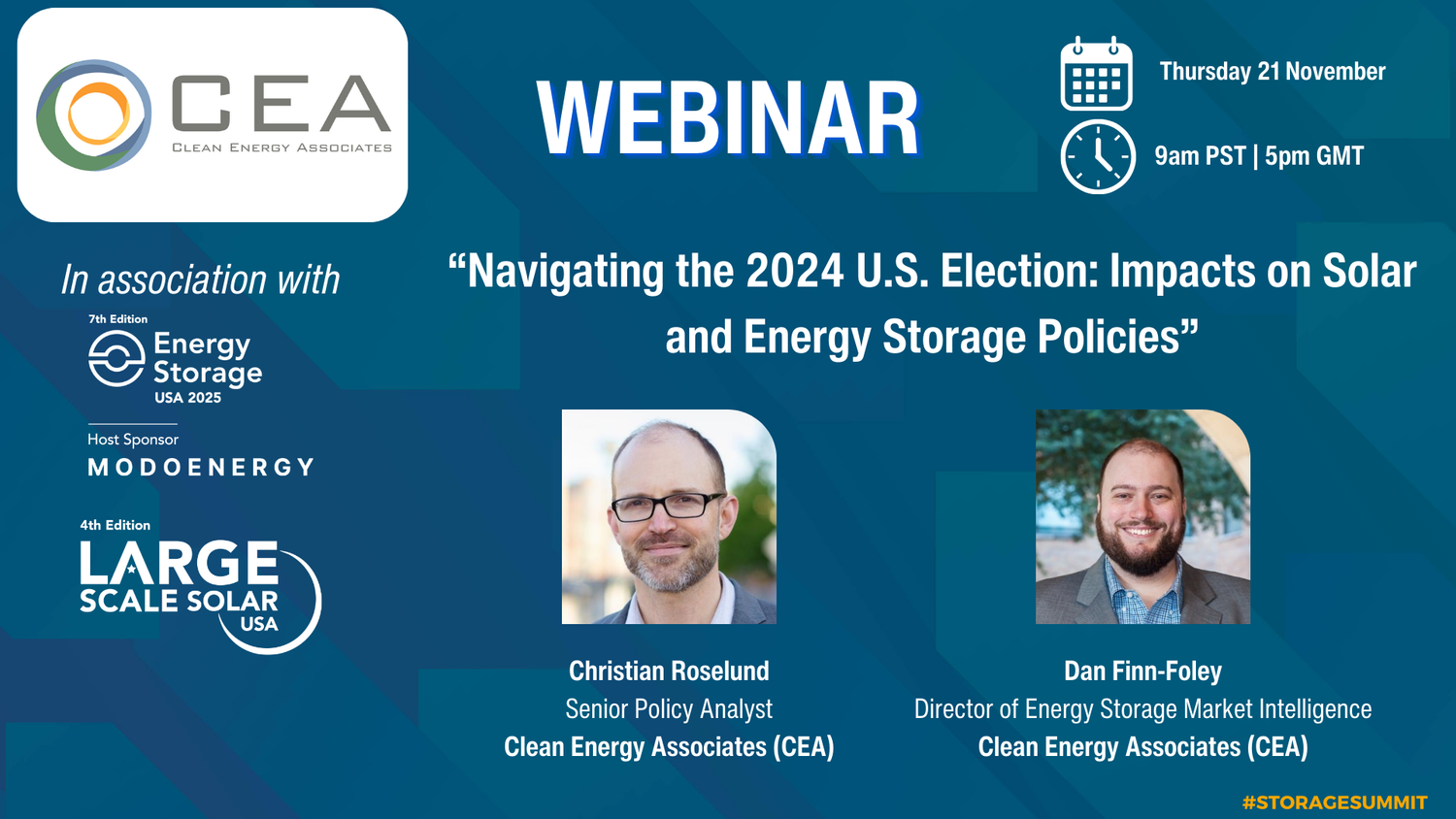
In this Energy Storage webinar, Senior Policy Analyst Christian Roselund and Director of Energy Storage Market Intelligence Dan Finn-Foley analyze the potential impacts of U.S. policy changes on solar and battery storage.

In this pv magazine article, Jeff Zwijack, CEA’s Senior Manager for Energy Storage, explores the essential factors in selecting battery energy storage system (BESS) suppliers. With insights on supplier technology, quality assurance, and risk mitigation, Zwijack guides developers in building resilient, high-performance energy storage projects.
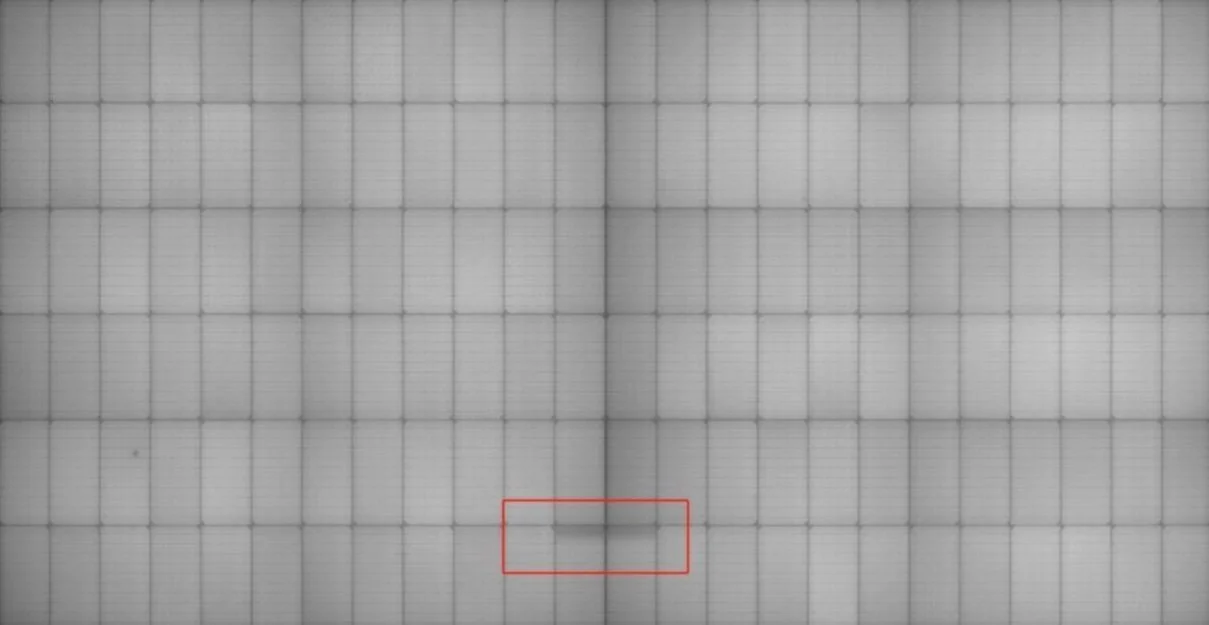
In this PV Tech article, Paul Wormser, Vice President of Technology, and Jake Edie, Vice President of Marketing, discuss the prevalence of soldering defects in solar panels, their impact on performance, and how robust quality assurance measures can help mitigate these risks.
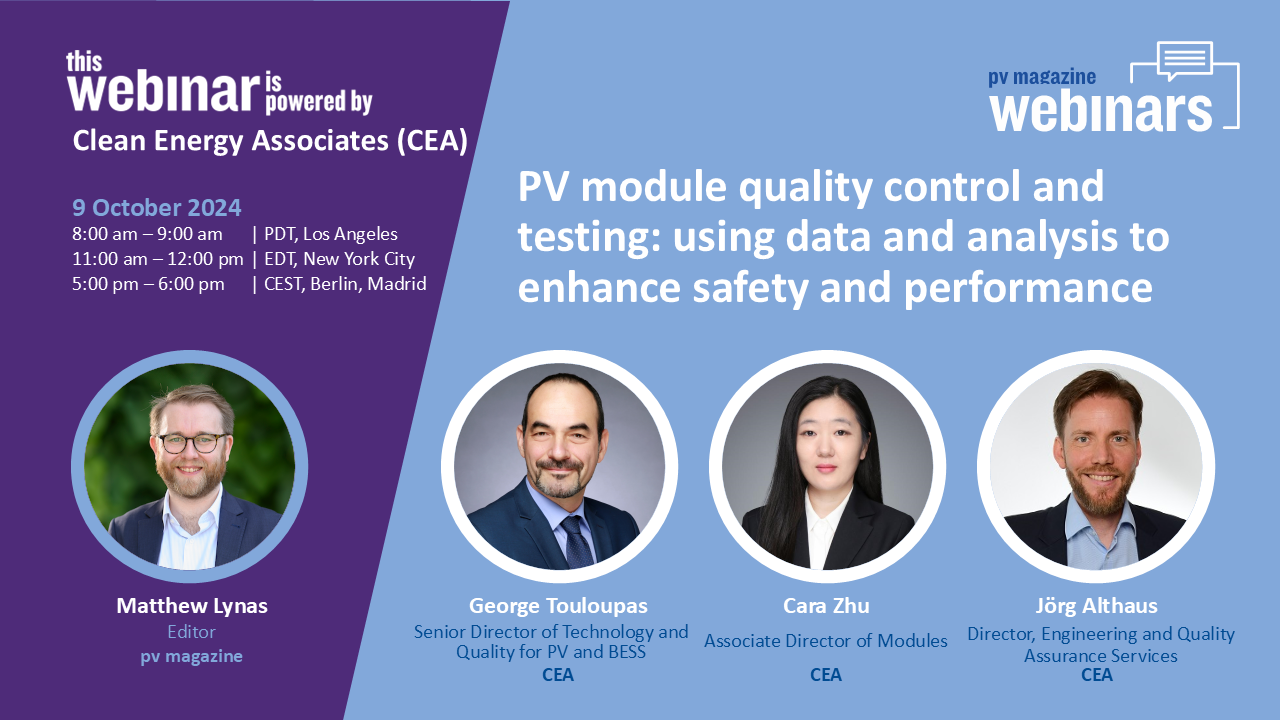
In this webinar, CEA experts present findings on the most common issues seen in PV manufacturing factories, based on their latest inspection data.

Over the past 8 years, Intertek CEA has conducted more than 70,000 quality inspections in over 300 PV module factories. This report highlights concerning quality trends from the past few years in PV module manufacturing, which could lead to performance and safety risks in the field.
In this Solar Power World article, Jake Edie, Vice President of Marketing CEA, discusses the changing dynamics in the solar and energy storage markets and emphasizes the importance of maintaining high standards for quality in suppliers, products, project design, and installation to avoid costly issues.
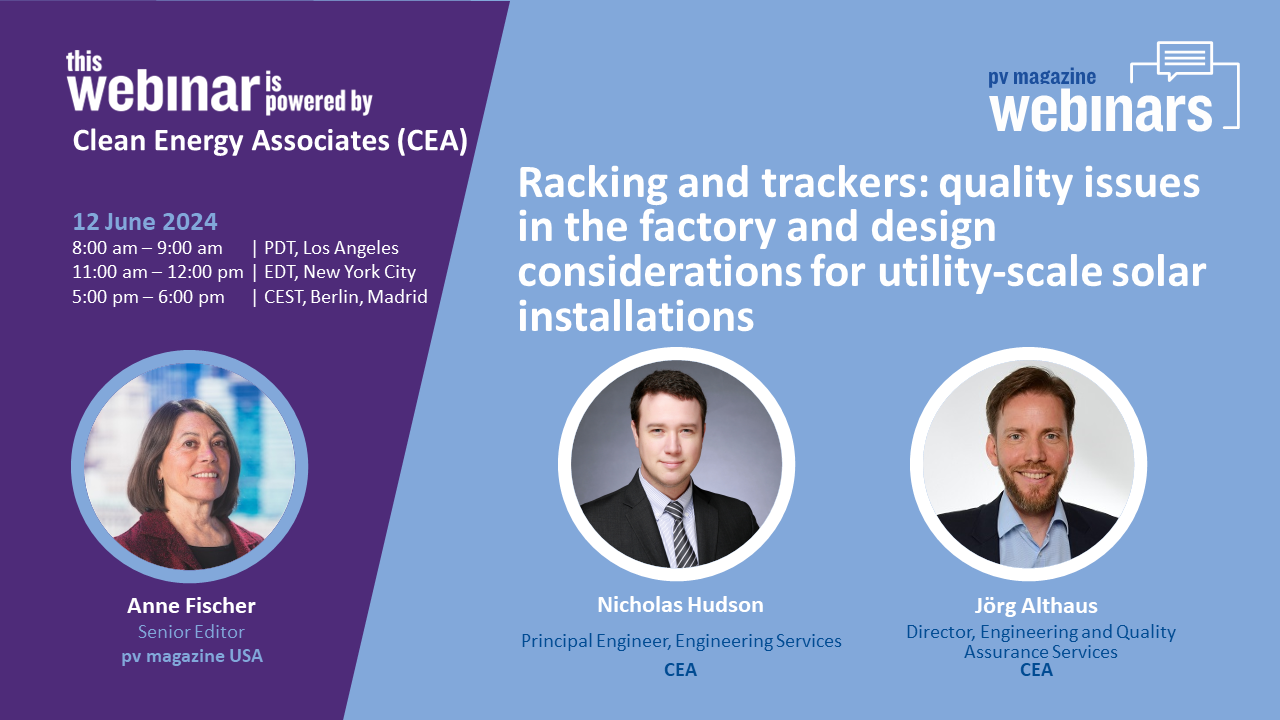
In this pv magazine Webinar, Nicholas Hudson, Principal Engineer Engineering Services, and Jörg Althaus, Director Engineering and Quality Assurance Services, discuss common issues during production, what the downstream impact of those issues are, and action that can be taken to prevent these risks.

Large-scale, stationary battery energy storage systems (BESS) have rapidly become crucial components of modern power grids. With the increasing adoption of BESS, however, the risk of battery fires has increased, as Jeff Zwijack of Clean Energy Associates reports.
CEA’s Vice President of Marketing, Jake Edie, recently wrote an article in Renewable Energy World about the most surprising findings in clean energy and what developers and buyers will be watching most closely as 2024 unfolds.

Following extensive factory quality audits on over 30 GWh of energy storage projects over the past six years, Intertek CEA’s BESS Quality Risks Report highlights identified key defects and issues, including their causes and associated risks.

In this Energy-Storage.news webinar, CEA’s Battery Energy Storage System (BESS) experts will share essential lessons learned after performing factory quality audits on over 30GWh of BESS projects.

CEA's Director of Engineering Services, Jörg Althaus, joins pv magazine's Roundtables Europe 2023 to discuss how the industry is addressing the longevity, testing methods, and problem prevention of new solar panel technologies like TOPCon to safeguard investments.