
Private Equity Fund Leads $100M Co-Investment in PV Module Manufacturer after CEA's Due Diligence Support
A leading private equity fund recently led an investment of over USD $100 million into a PV module manufacturer, supported by technical and market due diligence provided by Clean Energy Associates (CEA). The PV manufacturer, focusing on the United States solar market, was seeking growth capital to expand its solar manufacturing business.
During the evaluation process, the private equity fund approached CEA to perform technical due diligence and provide market intelligence on the manufacturer as well as the targeted solar market segment. The private equity fund sought CEA’s support based on the extensive breadth and depth of knowledge required to make this critical strategic decision in a very short time frame.
Due Diligence Incorporates Strategic Feedback Throughout Short Investment Window
The private equity fund was seeking to better understand what technical challenges the manufacturer would likely need to overcome in order to successfully expand their facilities, and whether or not the market landscape would allow the supplier to fully utilize its planned capacity.
CEA carried out the due diligence work over a five-week period, conducting semi-weekly discussions and updates with the fund to identify and address “fatal flaws” in real time and incorporate strategic feedback and updates. CEA’s findings enabled the private equity firm to tailor future work based on the concerns and risks identified.
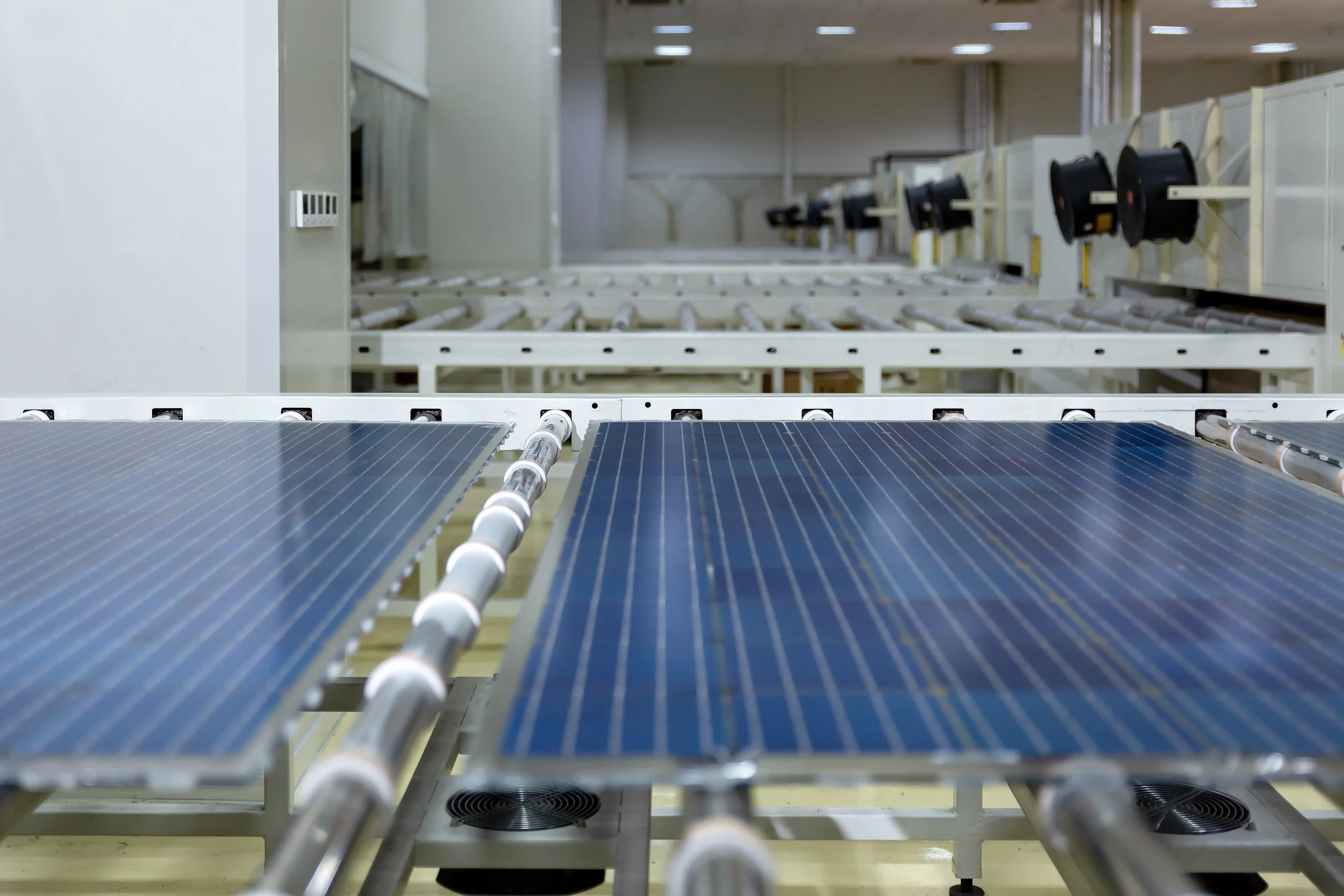
CEA evaluated the manufacturer’s competitive position, both technically and operationally. This included a visit and audit of their module manufacturing facility, inspection of the production lines, investigation into their quality control processes, and evaluation of the manufacturing technology. As part of the due diligence, CEA also surveyed and conducted interviews with major installers to get first-hand insights into end-user buying habits.
Technical and Market Analysis Leads to Key Insights
The final assessment of the PV manufacturer’s operations, the targeted market, and policy-driven risks and opportunities allowed the private equity fund to understand key market and demand drivers, including supply chain impacts, pricing competition, and logistics. Policy analysis shed light on the impact of government incentives on demand and risks of endmarket incentives, including relevant duties and tariffs.
The private equity fund was given an outlook on the competitive landscape, including the barriers to entry for solar module supply, and an assessment of end-customer decision factors, such as the impacts of brand, efficiency, and installer recommendations.
CEA’s technical and market insights helped the deal team properly frame the risk / return profile of the investment, which was critical in garnering support from the fund’s investment committee.
Key Deliverables Lead to Successful $100M Investment of PV Manufacturer
The due diligence assessment culminated in a formal recommendation that the market conditions and policy landscape were favorable, the manufacturer’s product was aligned with the target markets, the timing to market was right, and the team was competent to execute.
As part of the final analysis and recommendations, CEA highlighted risks regarding the manufacturer’s technology platform and cost structure and outlined the tight market conditions which could materialize if domestic incentives and tariff barriers were removed. This cautionary insight provided the private equity fund items to carefully consider and balance against the claims and expectations of the manufacturer.
The private equity fund ultimately decided to lead an investment of over USD $100 million to help the manufacturer expand their solar production.

On September 22, 2026, the US Commerce Department introduced an anti-stockpiling rule covering imports of polysilicon, ingots, wafers, cells, and modules ahead of new Minimum Import Price requirements and tariffs. The rule could restrict near-term shipments and disrupt US solar supply through December 4.

PV Tech: New solar factories face elevated quality risks during ramp-up as new staff, equipment, and production pressure increase defects. Intertek CEA’s Jordan Wilson explains how early audits and production monitoring can help buyers manage these risks.
Huatian Xu explains how Intertek CEA will continue testing and monitoring PV modules independently through its own R&D program following the conclusion of the pv magazine test program earlier this year.
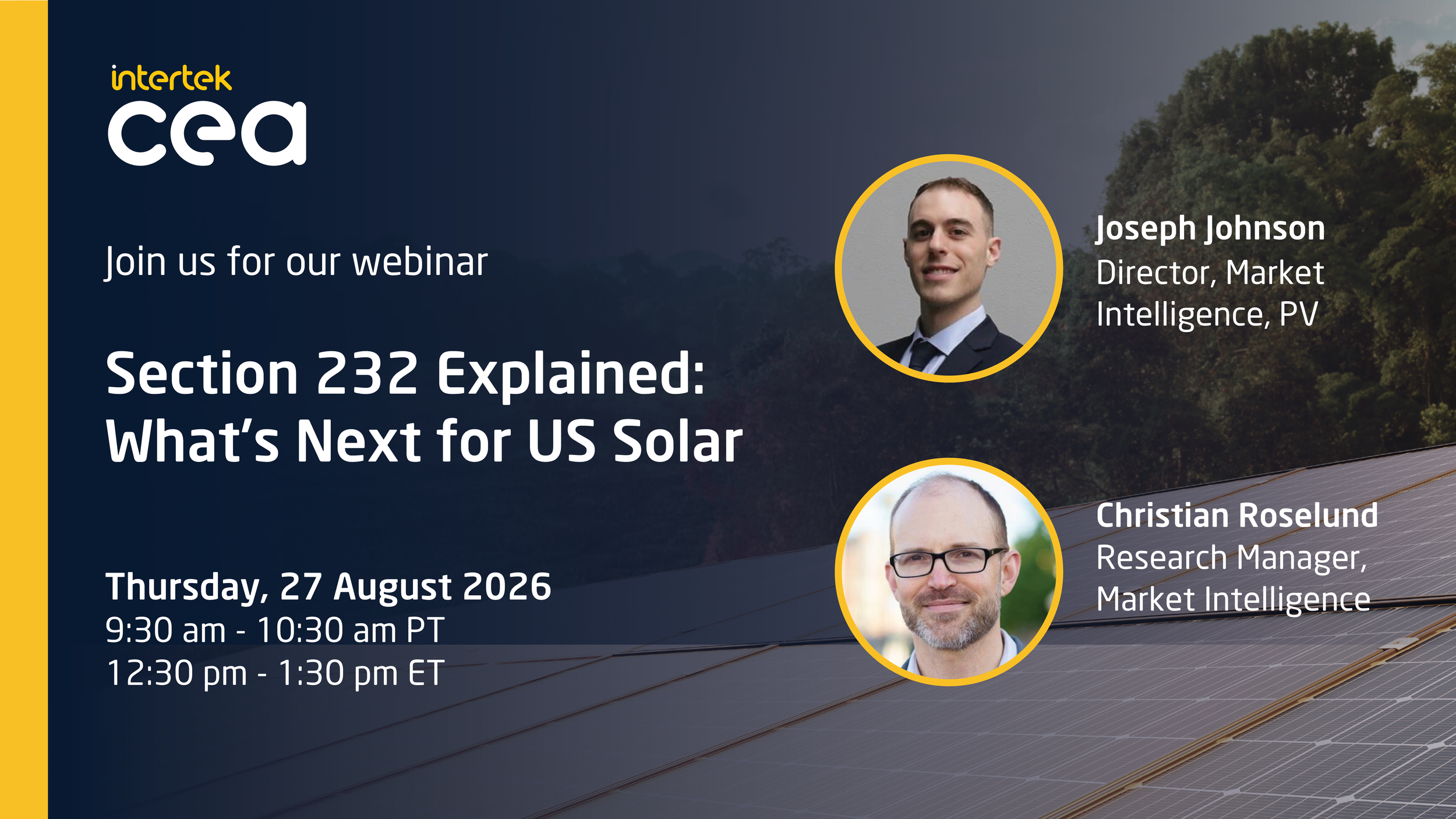
In this webinar, Intertek CEA's Joseph C. Johnson and Christian Roselund break down the market impacts of Section 232.
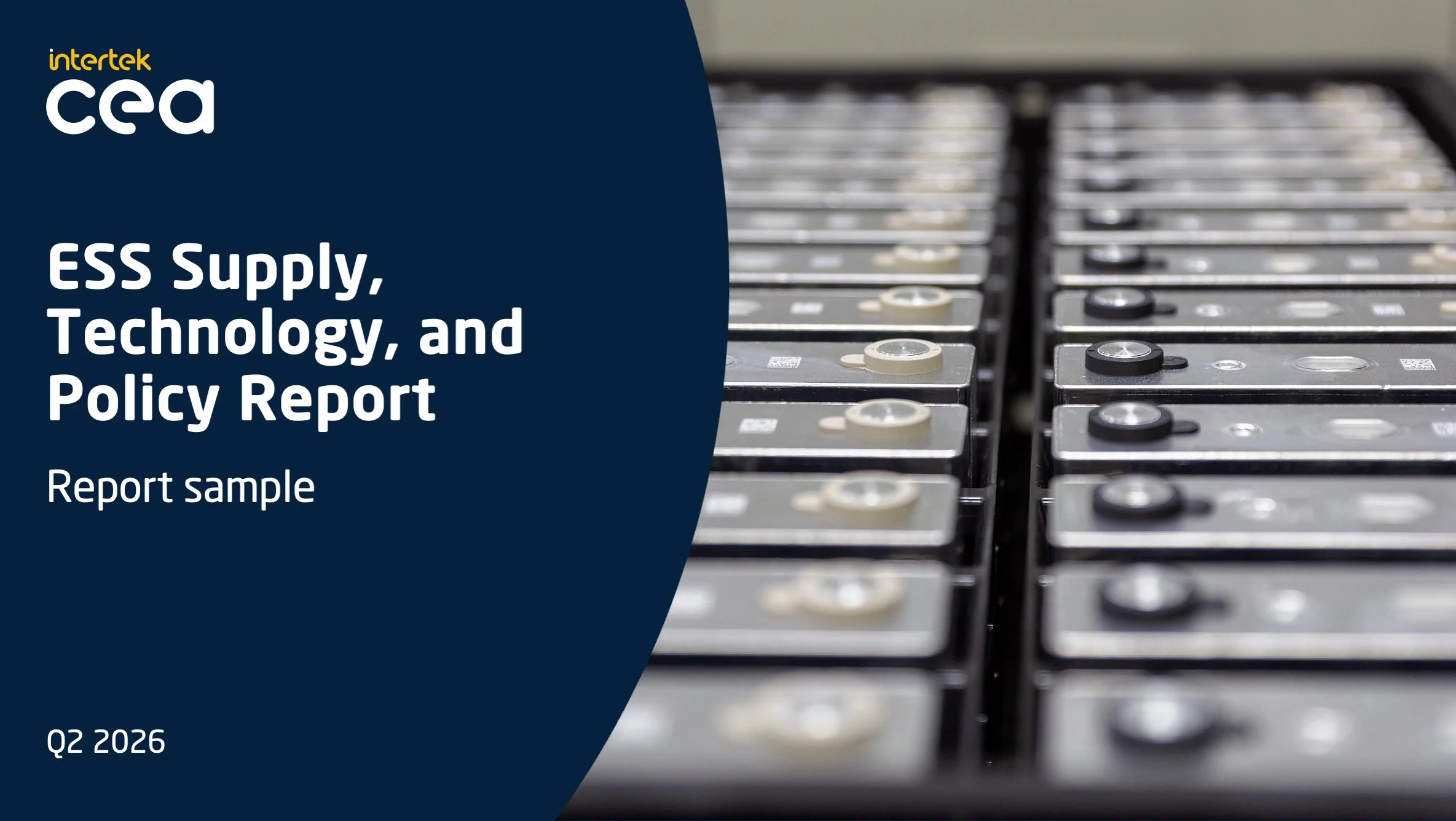
The quarterly Energy Storage STPR delivers global and regional supply chain analysis, technology trends, and policy insights, and this quarter focuses on cell product roadmaps toward larger form-factor cells and the emerging role of alternative technologies for UPS applications in the expanding data center market.
The quarterly published PV STPR covers global and regional supply chain analysis, technology trends, and regional policy analysis.
The PV Price Forecasting Report provides independent market intelligence on changes in global supply chains and accurate forecasts for supply price scenarios based on technologies, materials, manufacturing regions and target markets, as well as supply and demand forecasts and analysis.

The latest Energy Storage System (ESS) Supplier Market Intelligence Report includes concise and standardized analyses of major LIB cell suppliers and BESS integrators, focusing on global production capacities, product portfolios, and notable projects.
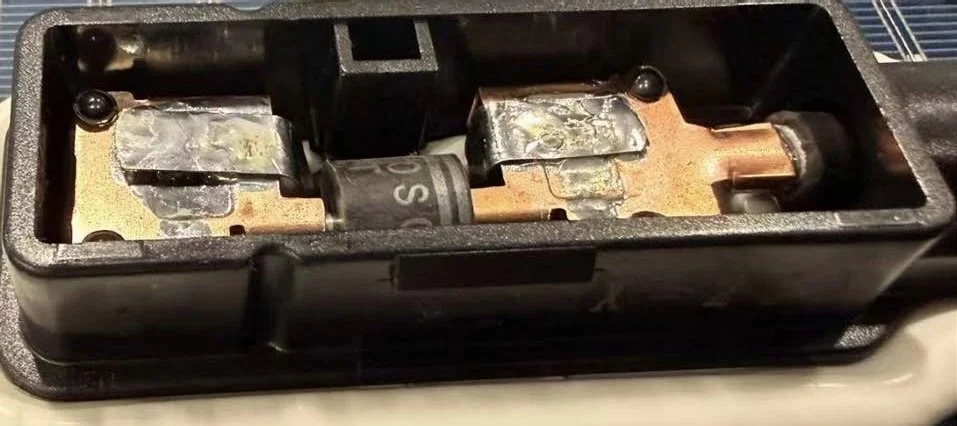
pv magazine: Claire Kearns-McCoy and Michael Scott of Intertek CEA report a rise in junction box failures across utility-scale and rooftop solar sites and explain why the only reliable window to catch these problems closes as soon as the potting compound cures.
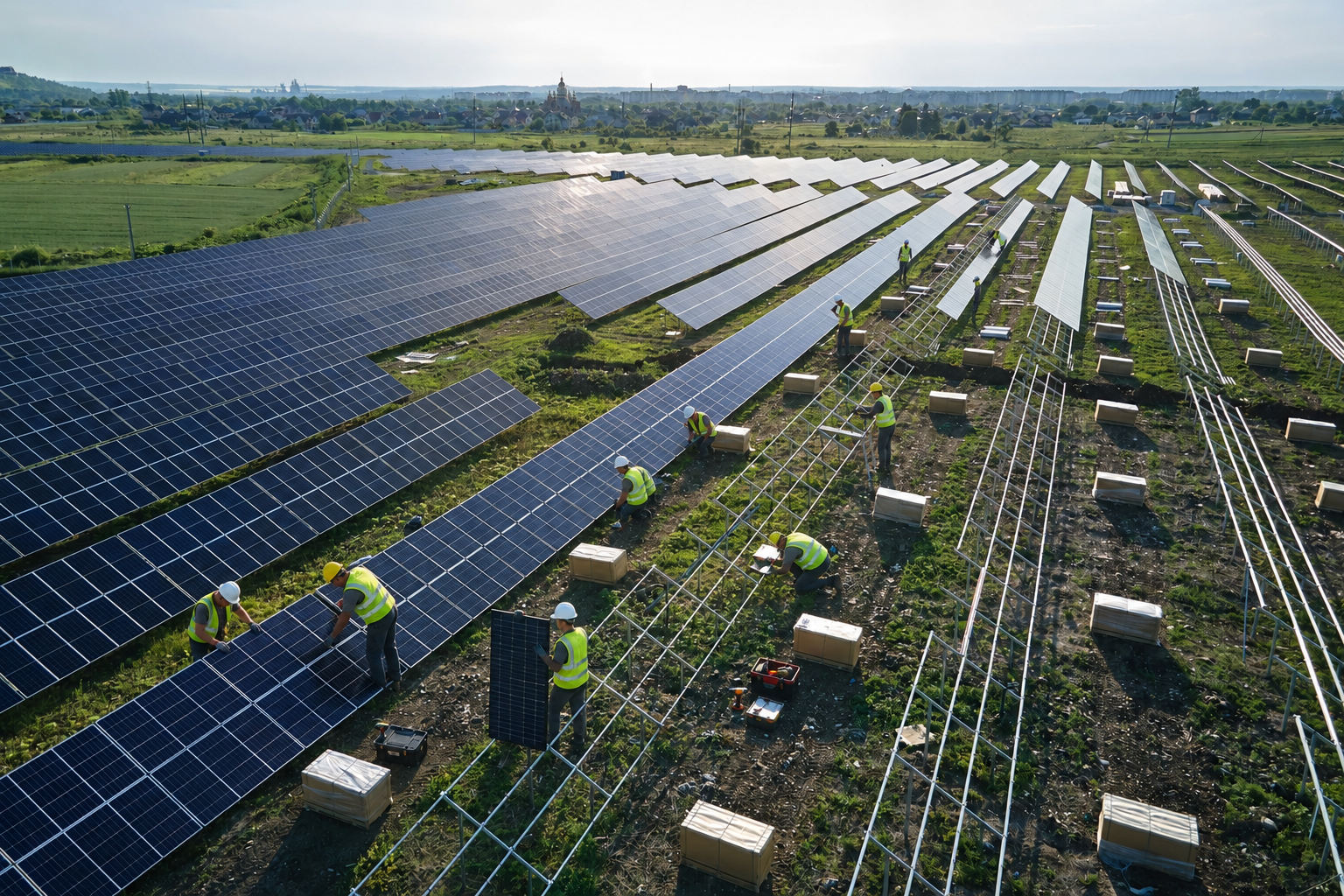
PV Tech: FEOC compliance can break down after contracts are signed as supplier ownership, IP licensing, or component changes affect tax-credit eligibility. Intertek CEA’s Jordan Wilson recommends ongoing monitoring, audits, bill-of-material controls, and contractual protections to manage risk through project completion.
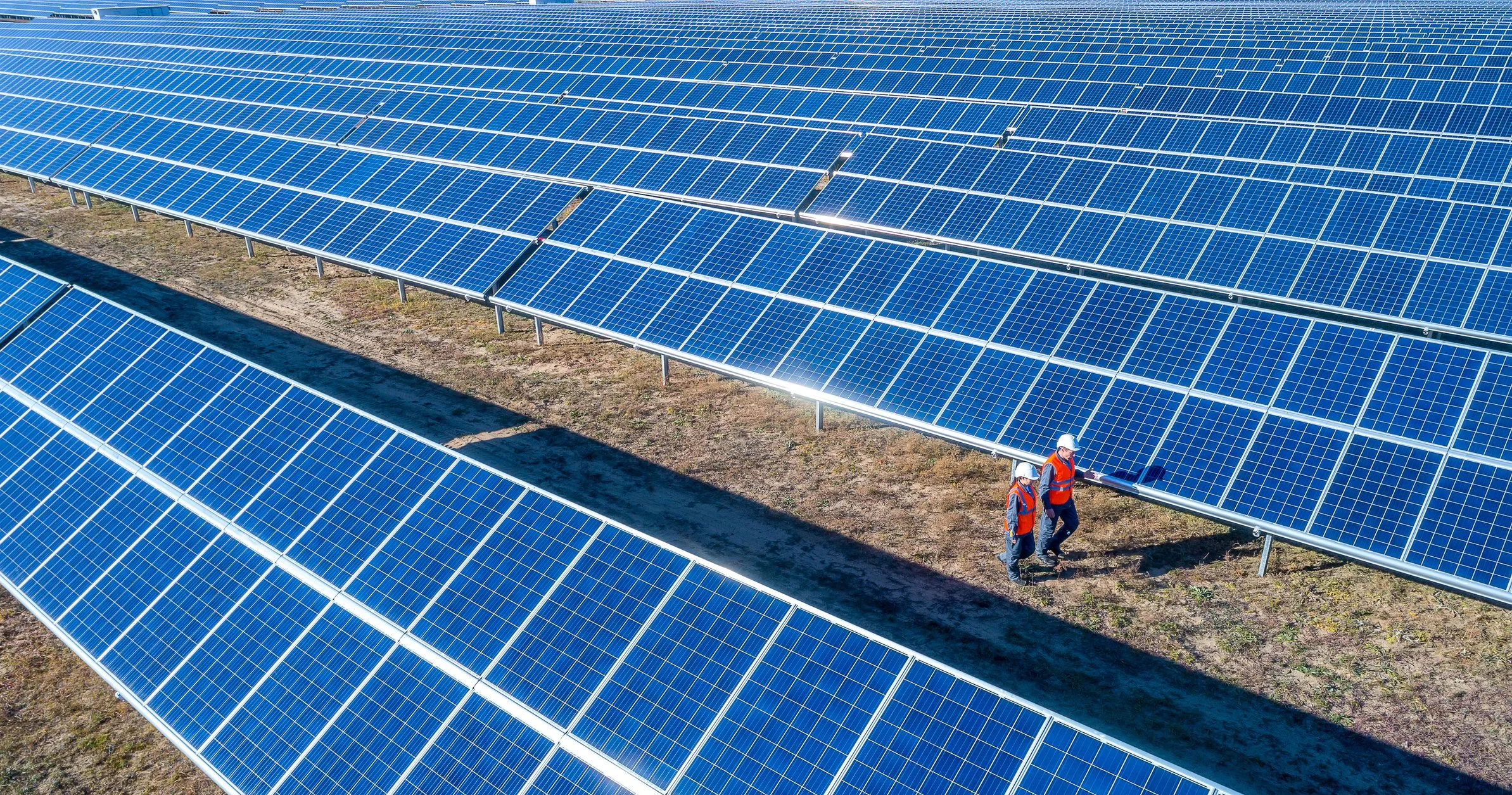
pv magazine: PV projects increasingly face financing and execution risk from documentation gaps. Intertek CEA COO Jeffrey Burkett sees technically sound, commercially viable projects struggle to close financing because critical proof was not built up along the way.

The ESS Price Forecasting Report provides an in-depth five-year forecast for the price of a DC battery container, including battery cells, modules, racking, and additional balance of system needed for a containerized battery system.

Junction box failures are rising across utility-scale solar. Intertek CEA experts reveal common defects, inspection gaps, and how to prevent safety, production, and warranty risks.
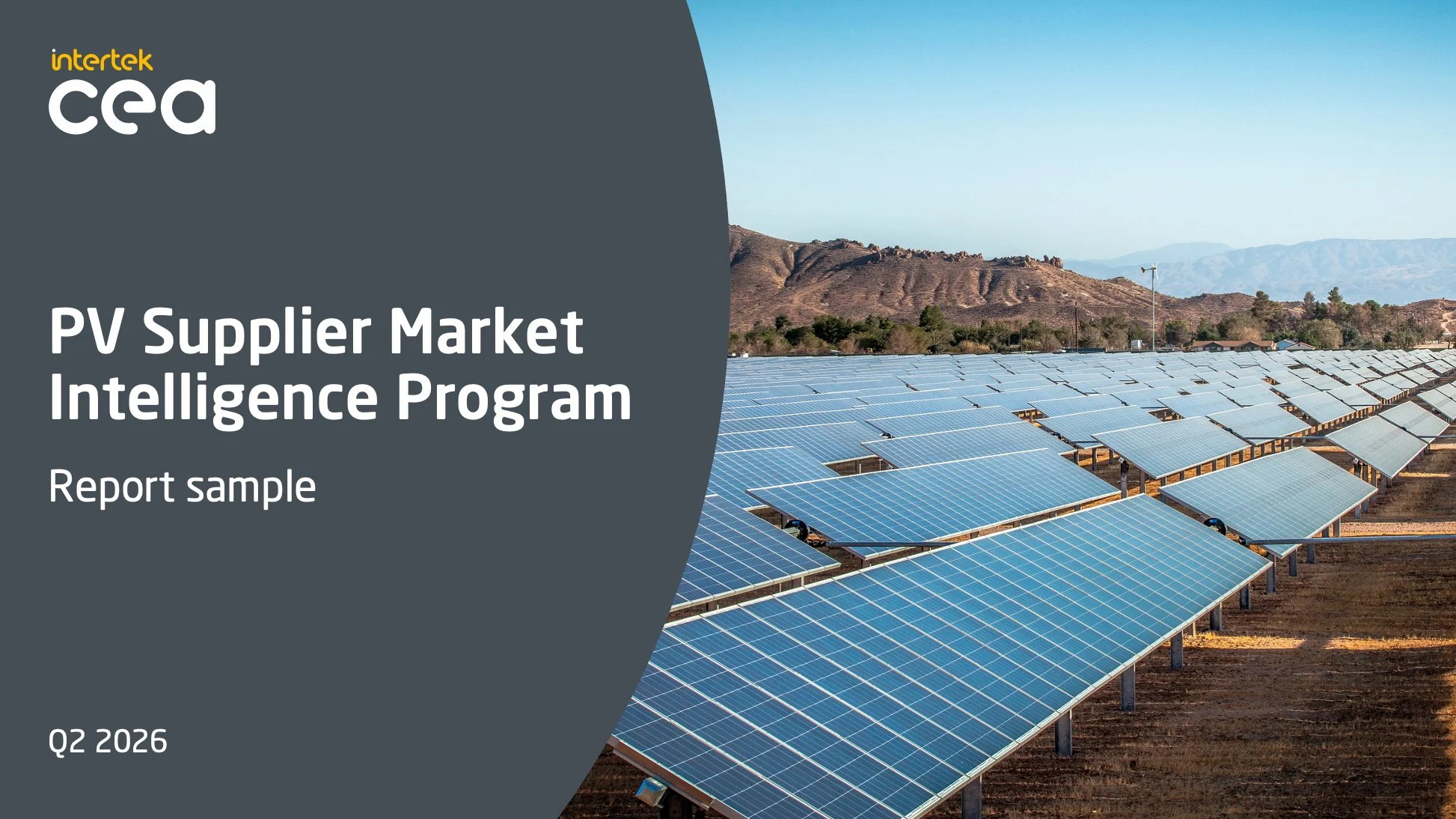
The PV SMIP provides a comprehensive and unbiased analysis of the top PV module manufacturers in the world. It offers detailed insights into capacities, technology, and efficiency roadmaps, along with Manufacturing, Capacity, and Technology (MCT) ratings for each supplier.
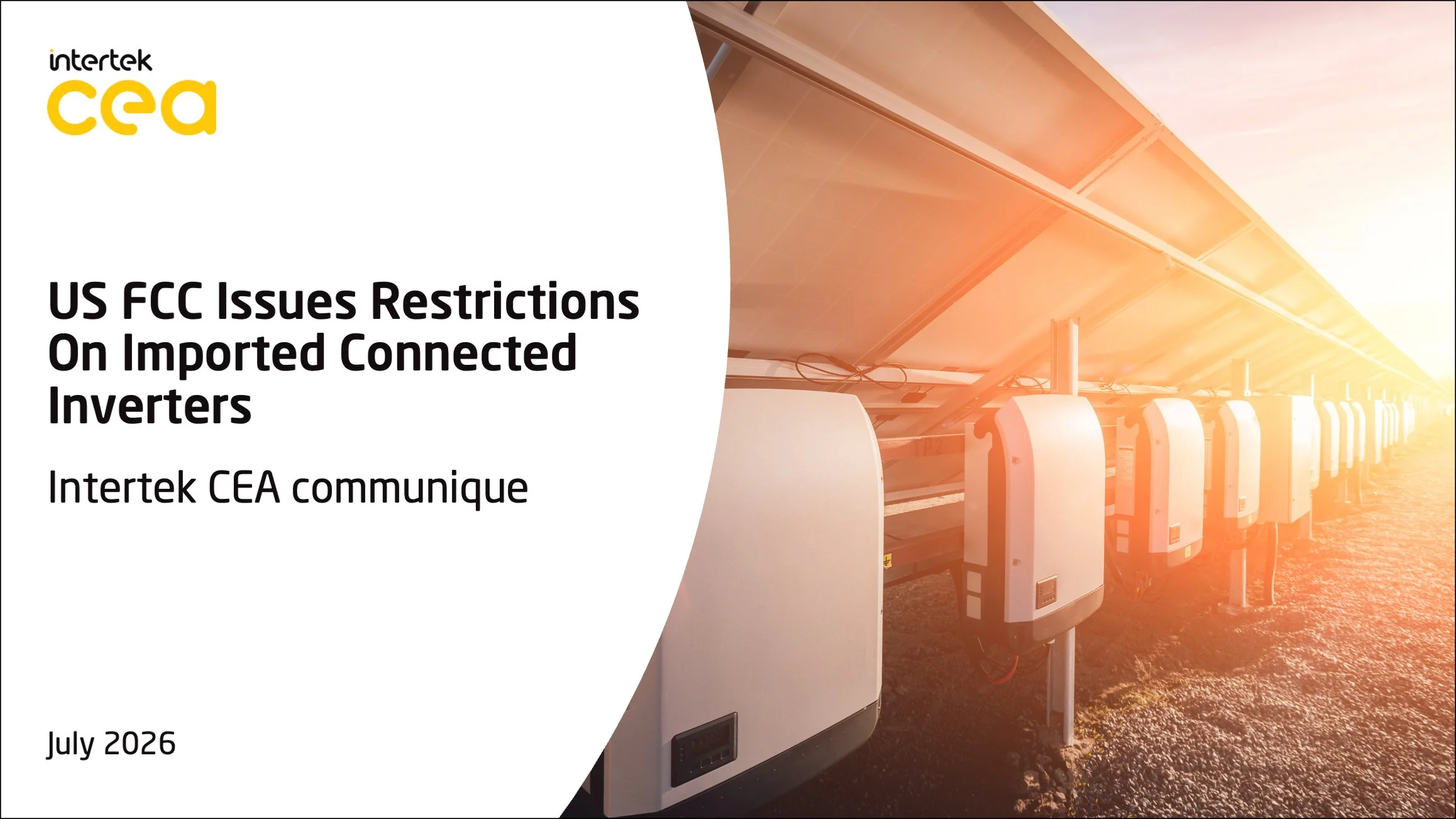
On July 28, 2026, the US Federal Communications Commission (FCC) restricted new foreign-made connected inverters unless they receive Conditional Approval. Unclear implementation could disrupt US solar and energy storage supply.

Energy Storage News: Rising demand for energy storage in the US does not yet have a domestic supply chain to meet it.

In this Energy Storage News webinar, Intertek CEA experts Paul Wormser and Dan Finn-Foley examine how FEOC requirements are reshaping ESS procurement in the United States.
The ESS Price Forecasting Report provides an in-depth five-year forecast for the price of a DC battery container, including battery cells, modules, racking, and additional balance of system needed for a containerized battery system.
The quarterly Energy Storage STPR delivers global and regional supply chain analysis, technology trends, and policy insights, and this quarter focuses on cell product roadmaps toward larger form-factor cells and the emerging role of alternative technologies for UPS applications in the expanding data center market.
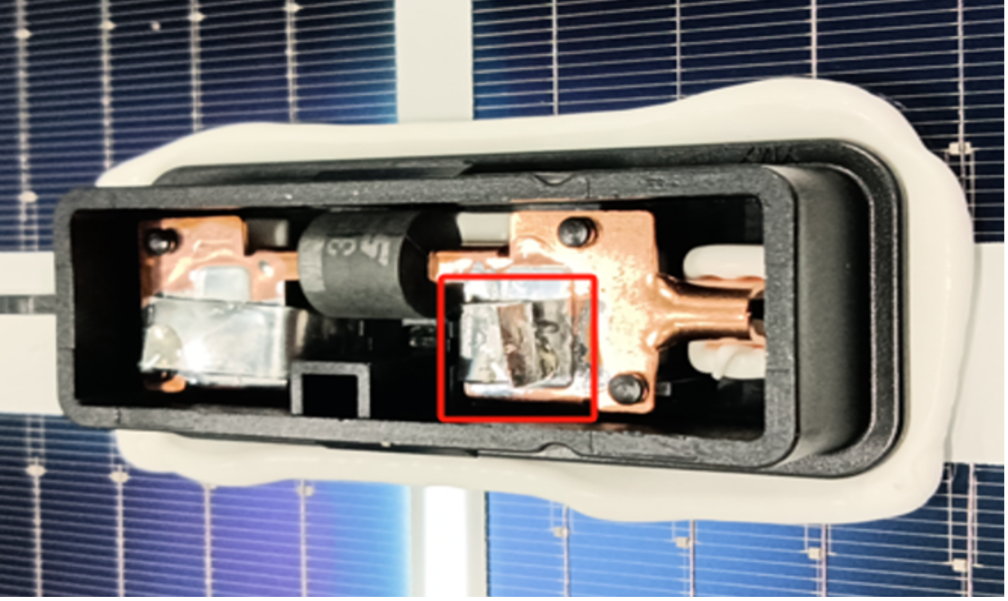
In this article, Joerg Althaus of Intertek CEA explains why lost bypass diodes in PV modules are a hidden fire risk: they can pass standard factory and field inspections, yet create severe overheating when shading occurs.
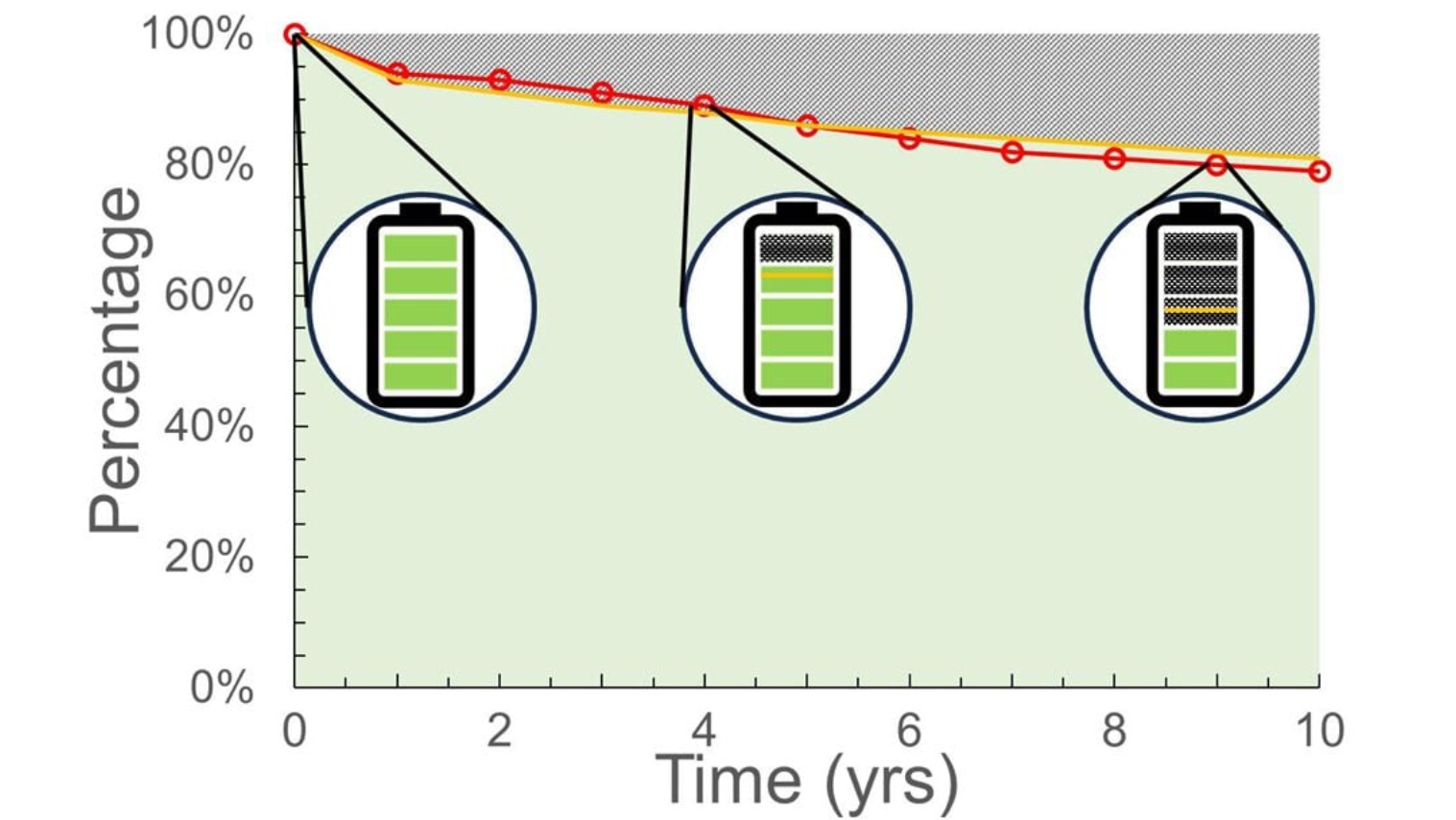
Energy Storage News: To avoid pitfalls that can begin on the factory floor and extend well into operational lifetime, developers must sign well-structured guarantees and contracts to protect their BESS investments, writes Intertek CEA Senior Energy Storage Engineer Yilin Huang.
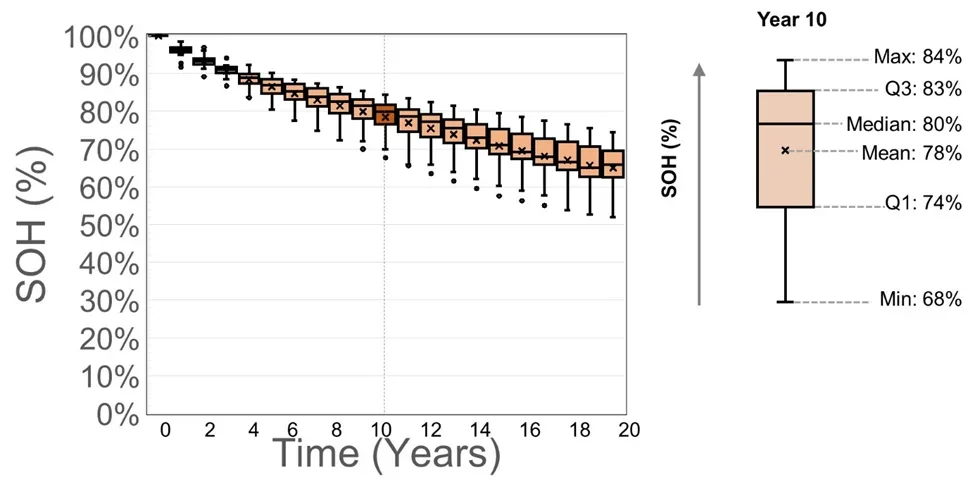
Energy Storage News: BESS performance guarantees are essential and ubiquitous, yet can be challenging to navigate, writes Intertek CEA Senior Energy Storage Engineer Yilin Huang.
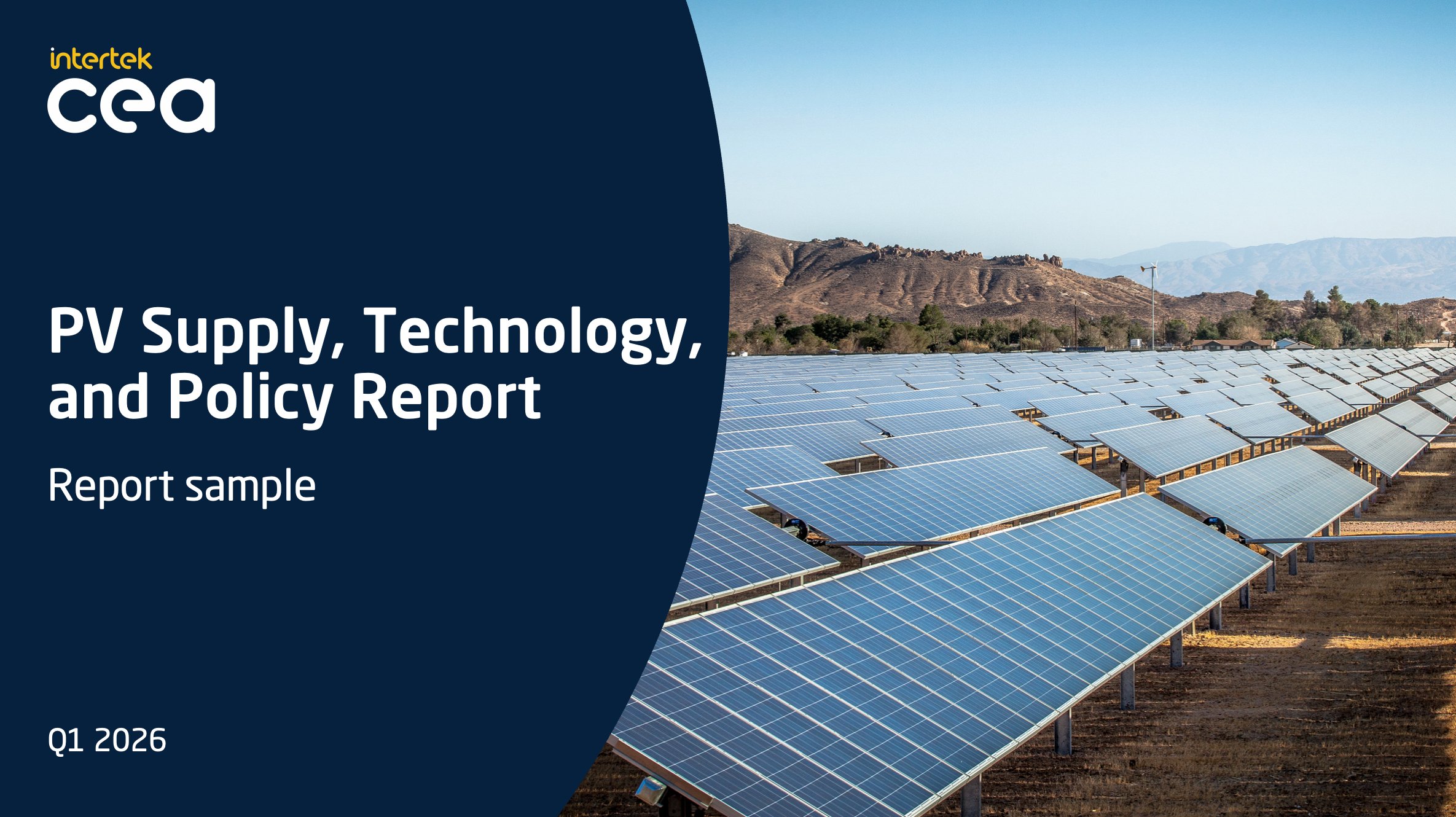
The quarterly published PV STPR covers global and regional supply chain analysis, technology trends, and regional policy analysis.
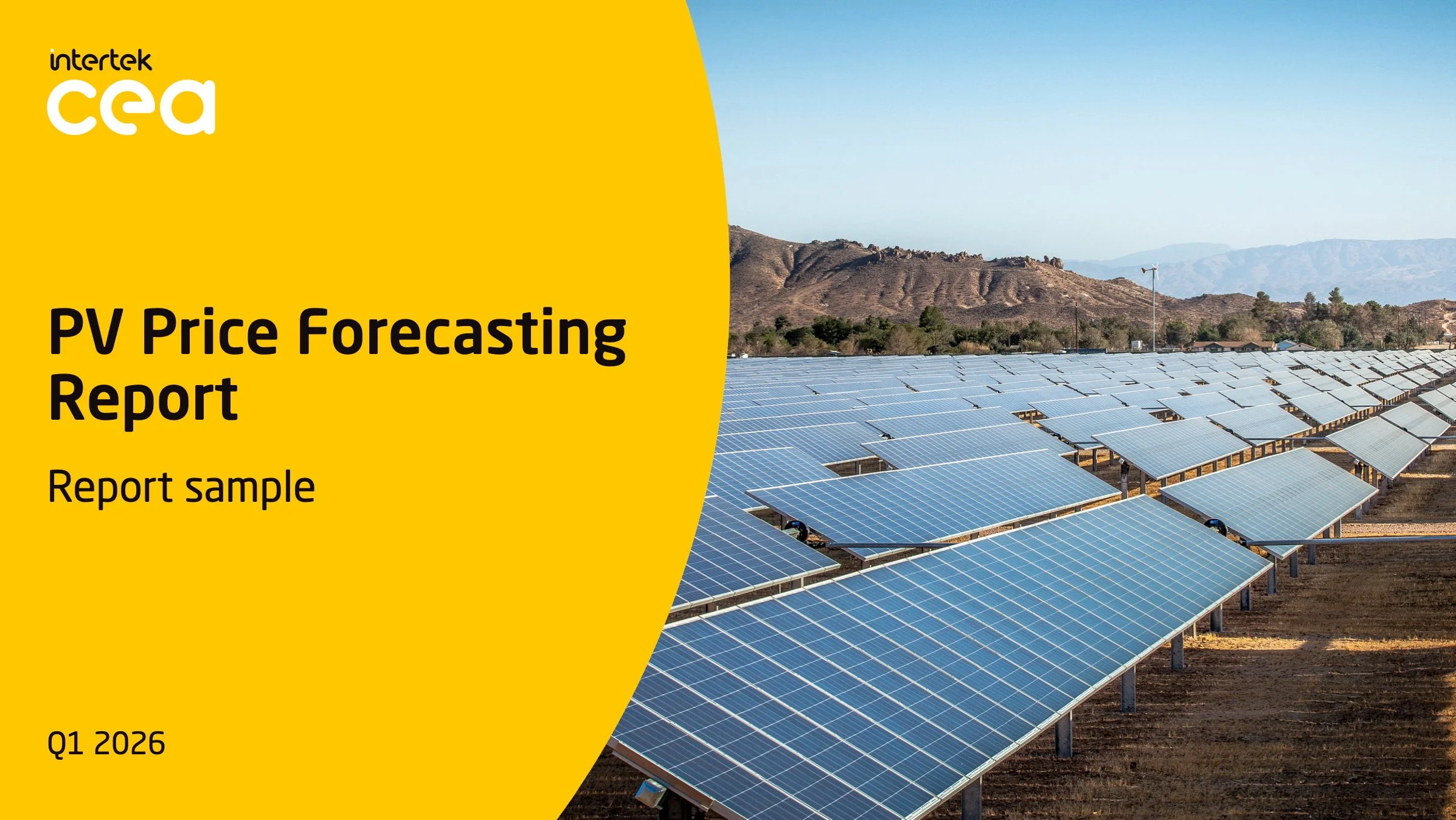
The PV Price Forecasting Report provides independent market intelligence on changes in global supply chains and accurate forecasts for supply price scenarios based on technologies, materials, manufacturing regions and target markets, as well as supply and demand forecasts and analysis.

The latest Energy Storage System (ESS) Supplier Market Intelligence Report includes concise and standardized analyses of major LIB cell suppliers and BESS integrators, focusing on global production capacities, product portfolios, and notable projects.
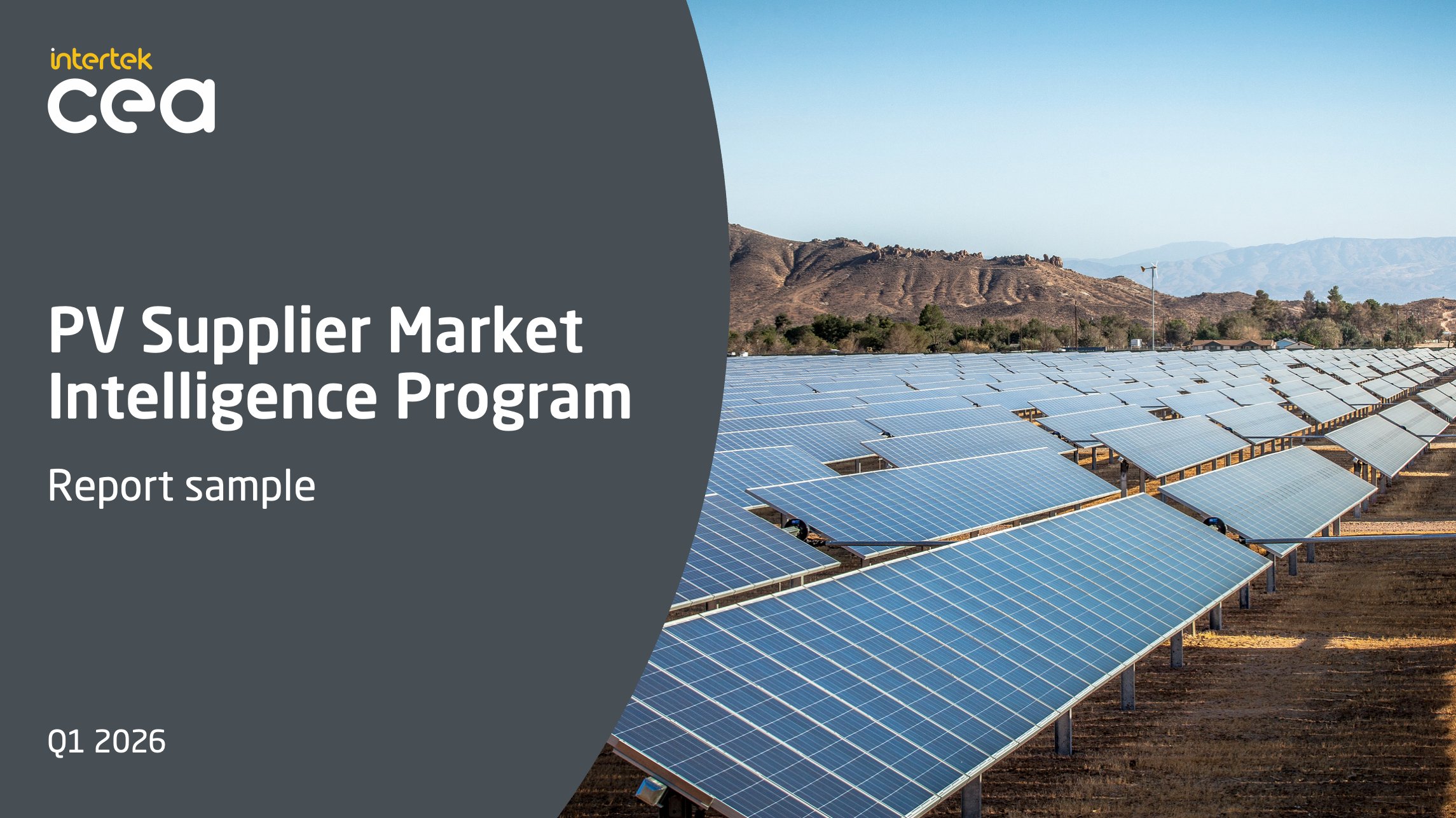
The PV SMIP provides a comprehensive and unbiased analysis of the top PV module manufacturers in the world. It offers detailed insights into capacities, technology, and efficiency roadmaps, along with Manufacturing, Capacity, and Technology (MCT) ratings for each supplier.