Preventing Costly Solar Junction Box Failures From Factory to Field
Junction box failures are rising, creating costly risks for solar projects. In this pv magazine webinar, Intertek CEA experts uncover what’s failing, why defects slip through inspections, and how to prevent safety issues, production losses, and warranty disputes across utility-scale installations worldwide today.

Junction box failures now rank among the most common and costly issues investigated by Intertek CEA's field team.
On affected sites, junction box defect rates range from 1% to 10% of installed modules. For utility-scale projects with hundreds of thousands of modules, even the low end of that range can represent thousands of potential reliability and safety concerns.
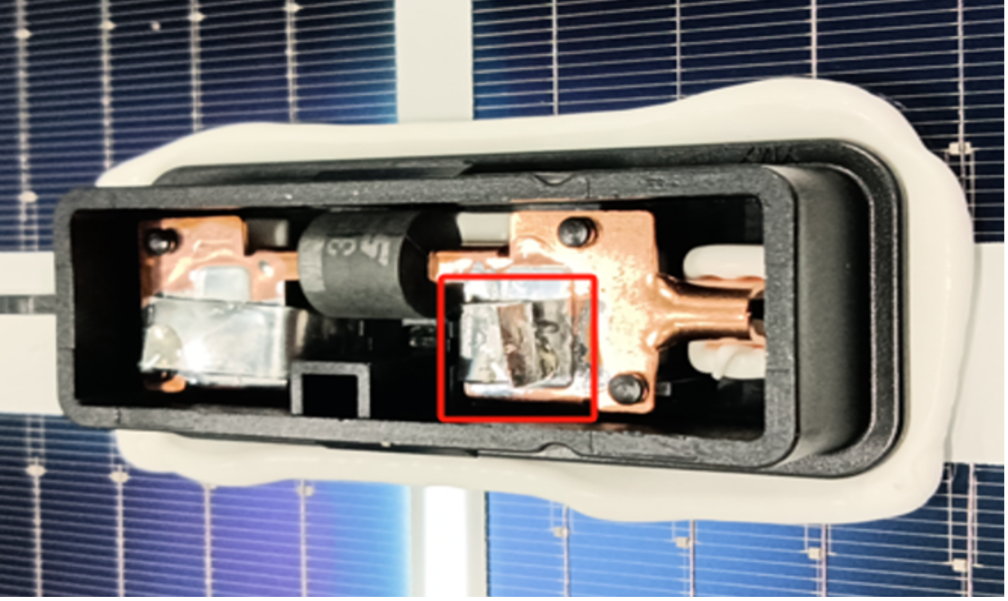
Without the right diligence and quality control, modules with junction box defects such as poor soldering, failed bypass diodes, adhesive issues, and improper crimps can leave the factory undetected. By the time the problem surfaces in the field, project owners may be facing lost production, warranty disputes, and, in some cases, thermal events.
So, what's actually failing inside the junction box? Why are these defects making it through quality inspections? And what can buyers, asset owners, and manufacturers do to prevent them?
In this live webinar, Intertek CEA's Ankil Sanghvi and Mike Scott break down what's going wrong inside the junction boxes, why it's happening more often, and what can actually be done about it, both on the factory floor and in the field.
pv magazine webinar content:
The most common junction box failure modes, what causes each one, and the consequences of each
How changes to module design have affected the risk of junction box failure
Why these defects can pass factory quality checks and only surface under real operating conditions
Approaches and best practices during procurement and module manufacturing that can prevent junction box failures
How to detect and address junction box problems in the field, including what your warranty claim actually requires
Advances in manufacturing that improve junction box soldering and reduce risks of junction box failures
Q&A

Junction box failures are rising across utility-scale solar. Intertek CEA experts reveal common defects, inspection gaps, and how to prevent safety, production, and warranty risks.
In this article, Joerg Althaus of Intertek CEA explains why lost bypass diodes in PV modules are a hidden fire risk: they can pass standard factory and field inspections, yet create severe overheating when shading occurs.
In this pv magazine webinar, experts from Intertek CEA and AePVI explore how developers, EPCS and investors can implement a testing and inspection program that is tailored to the specific needs of their PV plant.
pv magazine: Jörg Althaus and Huatian Xu detail how the Middle East’s rapid solar expansion is shaped by both aggressive local-content industrial policies and the region’s uniquely harsh desert conditions.
PV Tech: Joerg Althaus, Intertek CEA’s Director of Engineering Services and Quality Assurance, warns that racking complexity, corrosion, evolving supply chains, and rising glass breakage risks pose growing challenges to solar PV projects.
pv magazine: Jörg Althaus of Intertek CEA and Andreas Fladung of Aerial PV Inspection highlight how electroluminescence (EL) testing — including drone-based approaches — can uncover microcracks, early degradation, and installation-related damage.
pv magazine: Intertek CEA's engineering experts highlight how overlooked site-specific challenges such as poor soil conditions, flash floods, complex terrain, and extreme wind loading in Southeast Asia can derail solar projects if not addressed early through rigorous engineering and civil due diligence.
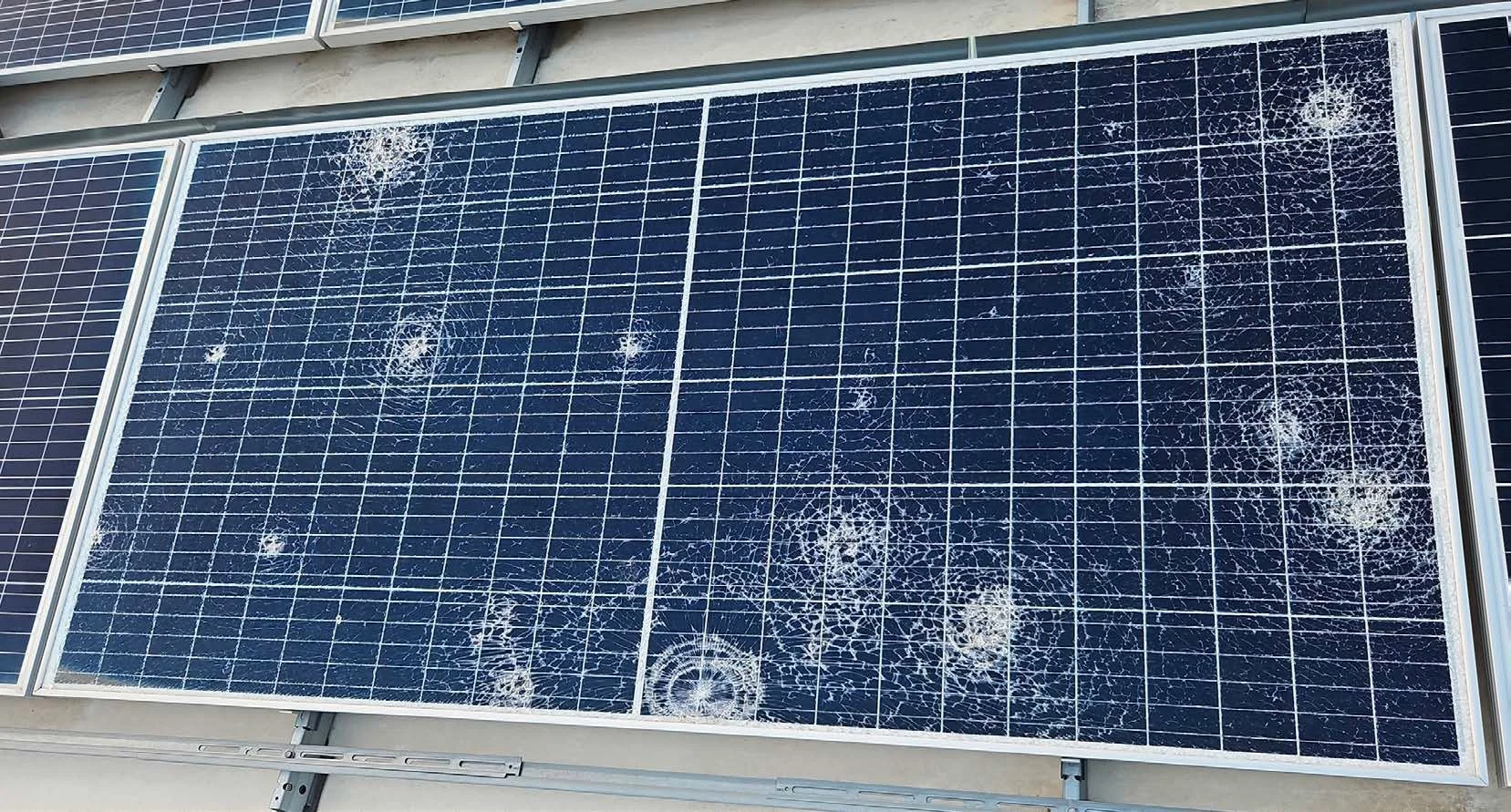
pv magazine: Solar modules are growing larger, thinner, and more powerful—but a recurring issue is emerging worldwide: broken glass. According to Intertek CEA’s Joerg Althaus, these cracks often start near the frame or clamps and can spread from a few panels to thousands, without any obvious cause like hail or mishandling.
As solar deployments continue to grow, so do the risks of module failures, underperformance, and safety hazards—many of which are preventable with the right knowledge. In this Solar Power World webinar, Intertek CEA Senior Engineering Managers Claire Kearns-McCoy and Ankil Sanghvi explain how understanding common pitfalls—from thermal events to electrical failures—can help developers avoid millions in losses.
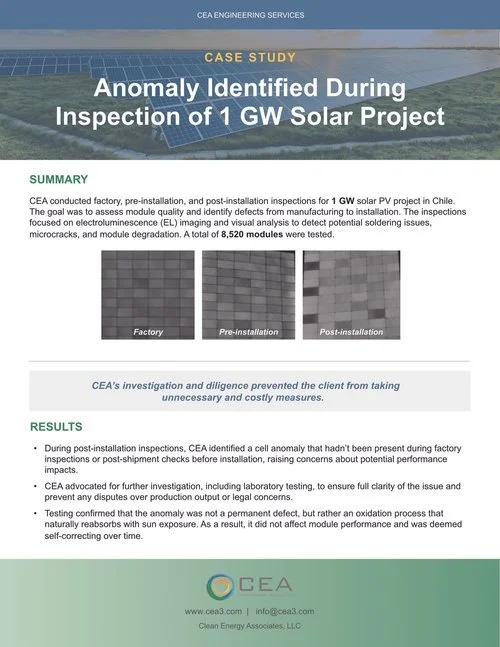
CEA conducted factory, pre-installation, and post-installation inspections for 1 GW solar PV portfolio in Chile. The goal was to assess module quality and identify defects from manufacturing to installation. The inspections focused on electroluminescence (EL) imaging and visual inspection to detect potential soldering issues, microcracks, and other module degradation mechanisms. A total of 8,520 images were taken.
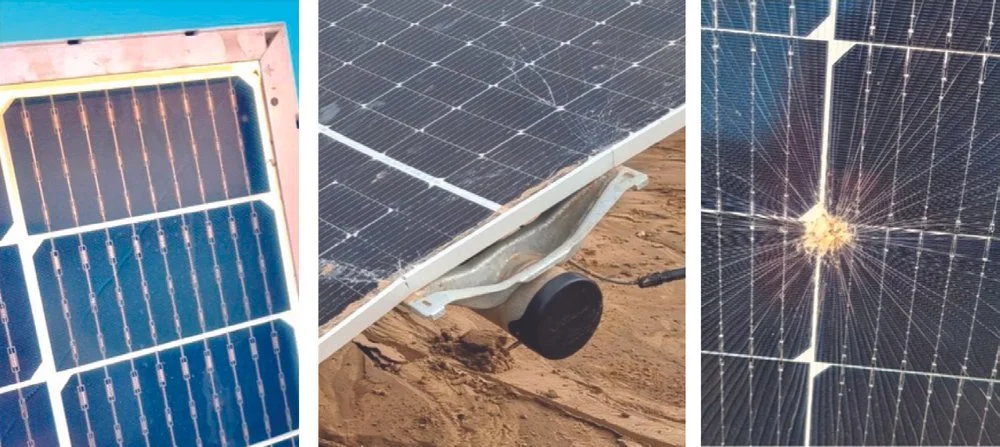
A solar project developer engaged CEA to investigate widespread glass breakage across multiple PV sites. CEA conducted comprehensive on-site inspections and structural assessments, which pointed to possible issues related to module durability and mounting system compatibility.
This case study explores a thermal event inspection carried out by Clean Energy Associates (CEA) at a rooftop solar PV installation. CEA found the access to the roof was unsecured that allowed unauthorized cleaning of the site prior to the start of the investigation.
Claire Kearns-McCoy and Paul Wormser consider the lasting impact of a May 2019 hailstorm that damaged 400,000 solar panels in Texas.
In this webinar hosted by the American Solar Energy Society's PV Technical Division, CEA's Engineering Manager Claire Kearns-McCoy discusses solar PV module quality risks.
CEA’s Vice President of Marketing, Jake Edie, recently wrote an article in Renewable Energy World about the most surprising findings in clean energy and what developers and buyers will be watching most closely as 2024 unfolds.
After years of improving quality standards, solar cell cracking appears to be on the rise again, perhaps due to new manufacturers entering the sector. Clean Energy Associates’ (CEA) senior engineering manager Claire Kearns-McCoy considers ways to stop the rot.
Intertek CEA's extensive field research unveils the hidden threats in solar PV modules, emphasizing the critical role of Electroluminescence (EL) testing in detecting unseen damages. Our findings highlight the lifecycle of module defects, the surge in microcracks, and the pivotal importance of visual inspections in identifying issues often missed by other methods.
Uncover the truth about solar rooftop safety. Download Intertek CEA's report, learn common risks, and strategize remediation.
pv magazine Roundtables USA included this presentation by CEA’s Senior Project Manager/Solar Engineer, Claire Kearns-McCoy on the importance of using EL imaging to ensure PV module quality.