Lost Bypass Diodes in PV Modules: A Hidden Fire Risk — and How to Find It
By Joerg Althaus
In this article, Joerg Althaus of Intertek CEA explains why lost bypass diodes in PV modules are a hidden fire risk: they can pass standard factory and field inspections, yet create severe overheating when shading occurs. He also outlines how targeted electrical field testing can screen strings, locate affected modules, and help owners reduce risk before damage or fire occurs.
The problem most PV inspections miss
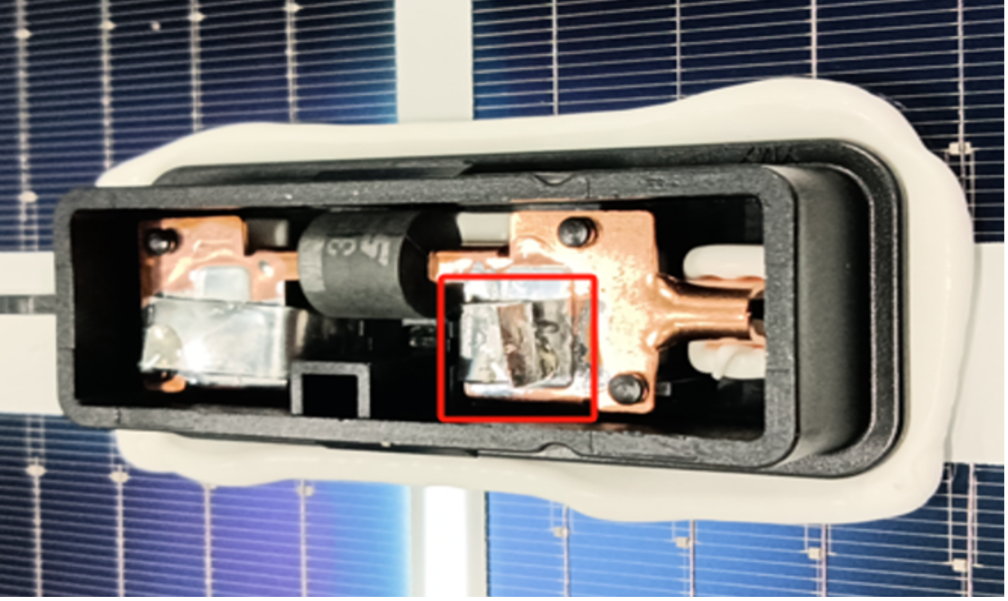
Bypass diodes are among the most important safety components in a PV module. In normal, unshaded operation they sit dormant — reverse-biased and inactive — which is exactly why a disconnected or non-contacting bypass diode (Figure 1) causes no detectable performance loss and slips through virtually every standard quality check. Flash testing measures IV curves under full illumination: all good. Electroluminescence imaging reveals cell cracks and inactive areas: all good. Conventional drone IR thermography sees nothing out of the ordinary. Visually, the junction box looks intact. The module ships, gets installed, and starts generating electricity — apparently without issue.
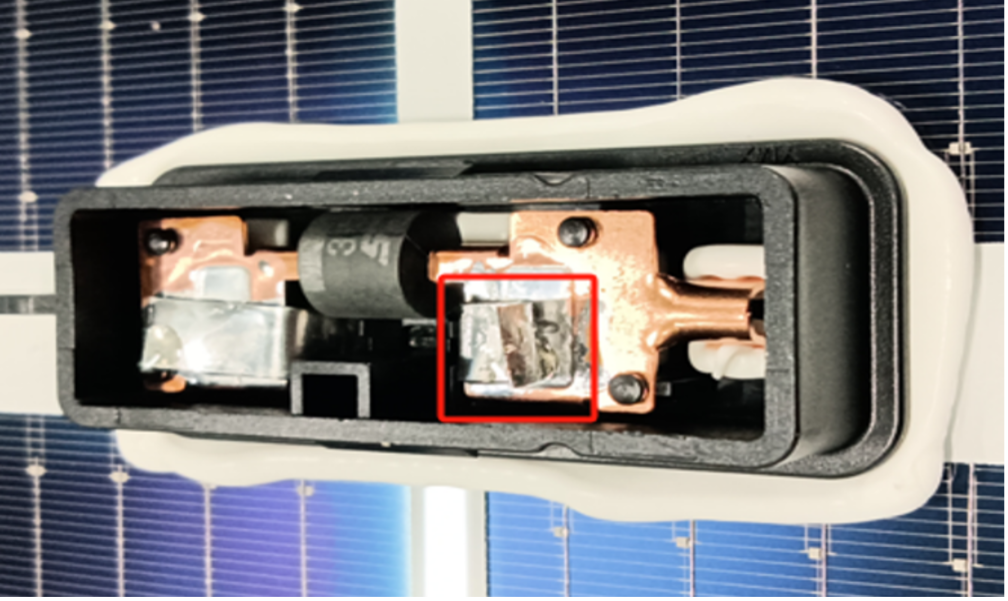
Figure 1: Bypass diode soldering issues detected in the factory
The problem surfaces the first time a shadow falls on the wrong substring.
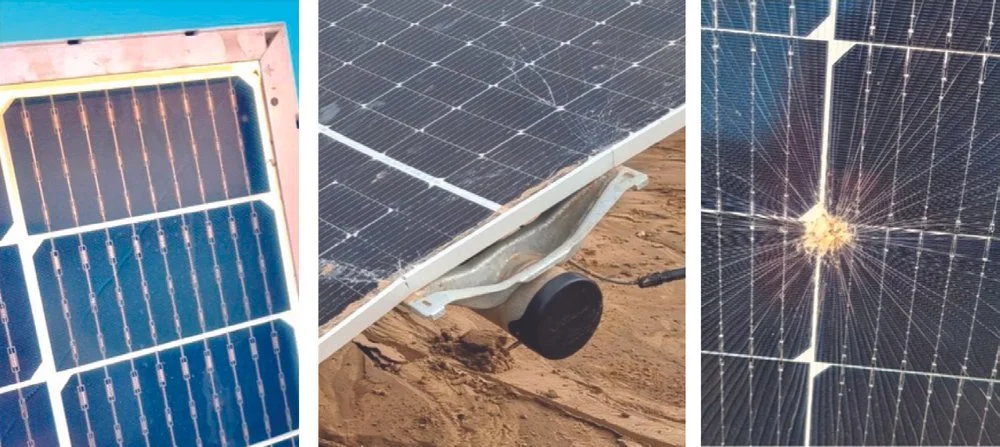
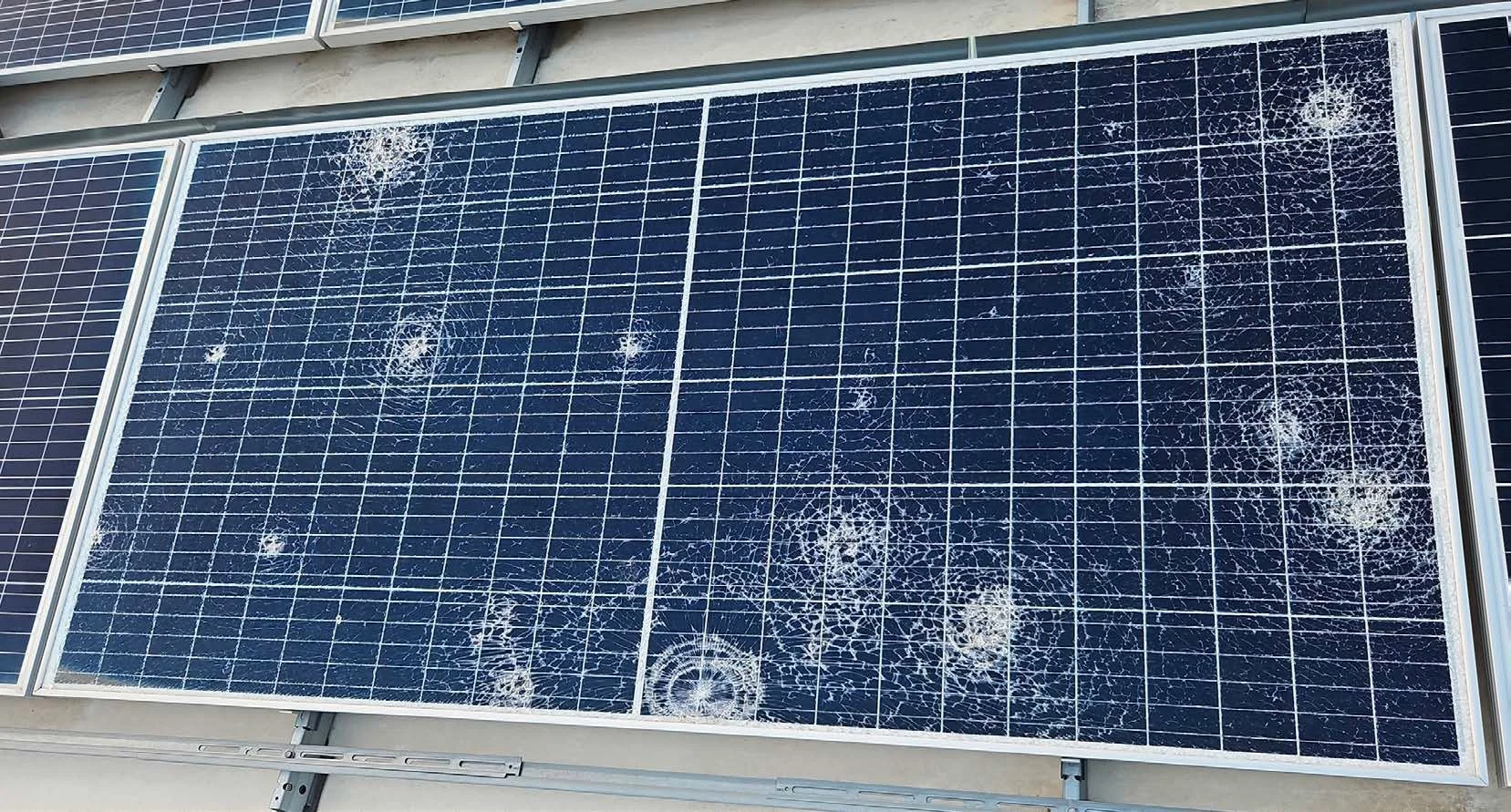
When a bypass diode is properly connected and a cell string is shaded, the diode conducts and reroutes the string current around the shaded cells. When the diode is not connected — physically detached from its contact tab, typically due to soldering issues — the full string current has nowhere to go except through the shaded cells in reverse direction. As solar cells are semiconductors, current flowing in reverse direction will cause power dissipation and consequently heating. With the high currents and voltage drop the localized temperatures can exceed 500 °C. The outcome ranges from burned backsheets and delamination to arc formation, glass melt-through, and fire.
This is not a theoretical scenario. Real-world examples include large number of glass-foil modules in the Netherlands destroyed in 2024 and bifacial modules in France with major burn marks in 2023 (Figure 2), both with documented lost bypass diodes (LBPD) as the root cause.
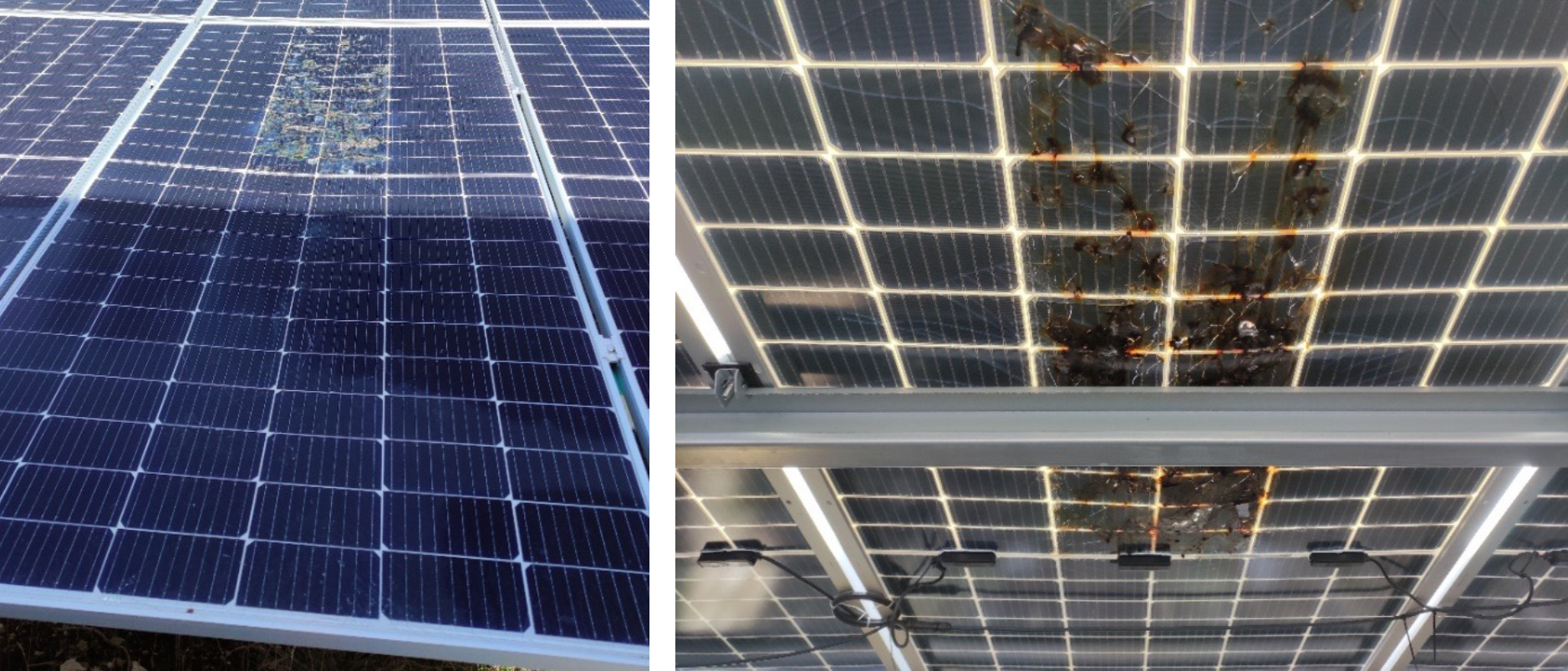
Figure 2: Front and rear view of module from French installation with row-to-row shading that caused burn marks
Disassembly of affected modules revealed the soldering issues present inside the junction boxes originating from manufacturing issues.. Since the junction box itself typically remains intact and electrically functional, the defect is undetectable without a test that specifically challenges the continuity of the diode's connection into the module circuit.
The risk is amplified by two technology trends. First, modern butterfly-architecture modules connect two substrings per bypass diode, meaning a single disconnected diode exposes roughly twice as many cells to reverse bias as older designs (Figure 3). Second, research has shown that TOPCon cells have a significantly higher reverse breakdown voltage than PERC or Al-BSF cells, meaning that under unprotected shading conditions the shaded cells must absorb considerably more energy before avalanche breakdown occurs — resulting in higher peak hotspot temperatures and a greater risk of irreversible thermal damage.¹ For TOPCon-based portfolios in particular, functional bypass diode protection is not a secondary quality parameter — it is a fundamental safety requirement.
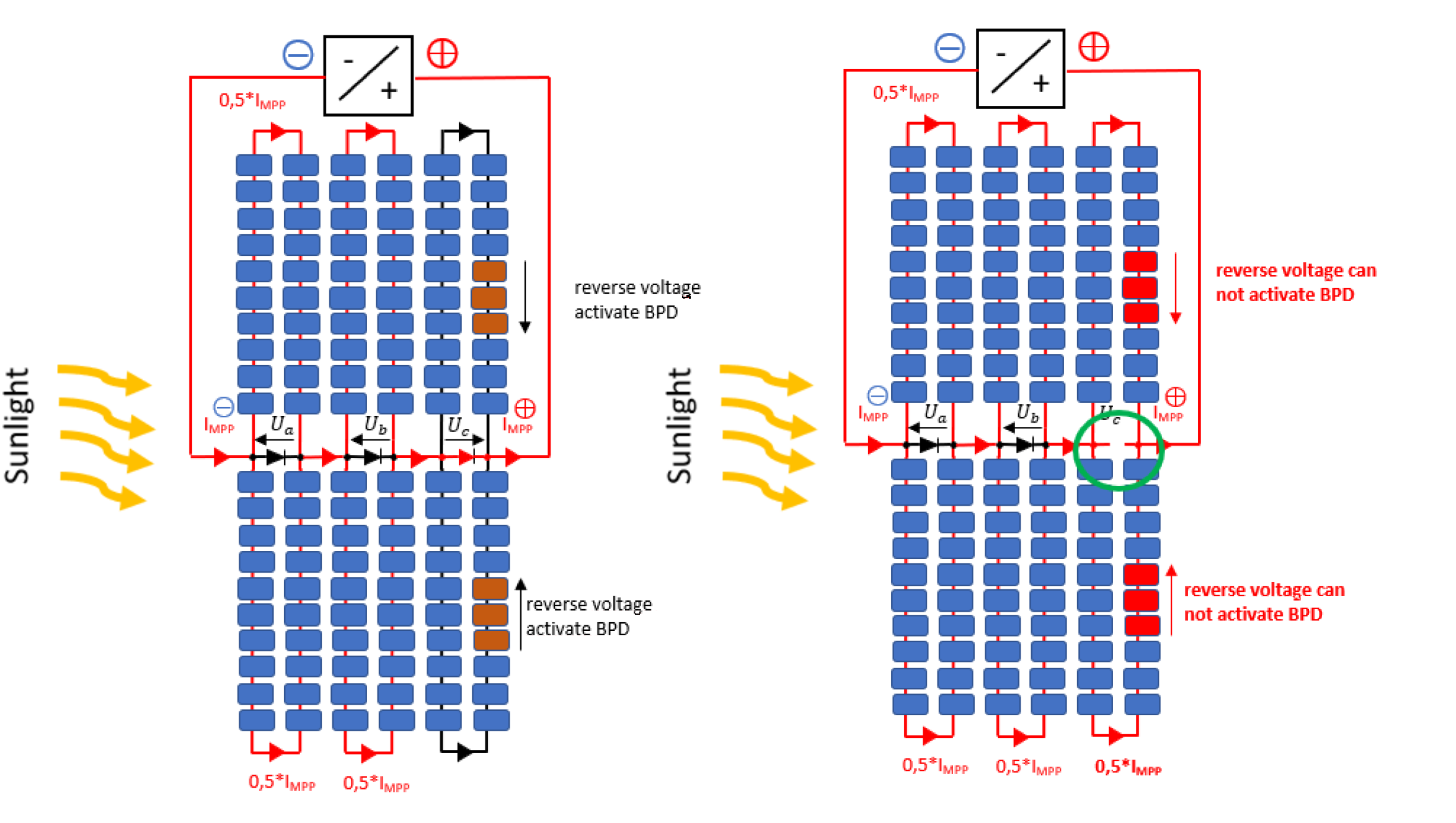
Figure 3: Butterfly architecture with functional bypass diode under shading vs. a Lost Bypass Diode under shading
Why conventional field testing cannot detect this
Lost Bypass Diodes are invisible to every standard field measurement method currently in use. This is not a question of measurement quality or operator skill; it is a consequence of how the defect behaves in normal operation. In full sunlight, with no shading, a disconnected bypass diode causes no electrical anomaly whatsoever. The module produces its rated power. Its IV curve is normal. A drone IR flight shows uniform temperature across the module surface. There is simply no measurable signature of the missing diode connection under ordinary operating conditions.
It has sometimes been suggested that LBPDs can be detected in the field by deliberately provoking partial shading — manually shading a substring and observing with a thermal camera whether the expected bypass diode activation signature appears. This works in principle, but it is slow, weather-dependent, requires favorable irradiance conditions, demands that modules be accessed and shaded individually, and scales extremely poorly across a large plant. For any serious assessment campaign, it is not a viable methodology.
The good news is that it is also completely unnecessary.
A better approach: fast, non-invasive, and scalable
A new field method detects Lost Bypass Diodes electrically, without shading a single module and without removing or opening any panel. Using a portable power supply and an IR camera, testing is performed at two levels.
Intertek CEA field teams have found that an entire string can be screened in minutes. The result is immediate and unambiguous — the test equipment directly indicates whether all bypass diodes in the string are connected, and if not, how many are affected. No interpretation is required. No irradiance conditions need to be met. The test is performed at night, with the string temporarily disconnected from the inverter, so plant production during the day is entirely unaffected.
For any string where a problem is identified, the testing team moves directly to module-level localization. A controlled electrical stimulus induces a safe, detectable thermal signature in the affected cells within seconds, which is captures with an IR camera. The exact module — and the specific substring — is identified and documented. No panels are moved. No junction boxes are opened.
The entire workflow, from arriving at a string to having a documented result with the affected module identified, takes a fraction of the time that manual shading approaches require, and it works equally well in winter, at night, and on trackers or fixed-tilt systems.
Catch it in the factory, not the field
The most efficient place to identify LBPD is before modules ever leave the factory. Every manufacturer already performs EL testing as a standard inline quality check, using equipment that is already connected to the module's DC terminals on every single module produced.
A simple modification to that existing test step — requiring no new hardware — would be sufficient to identify every module where a bypass diode has no electrical connection at all. The principle is straightforward and the check takes only seconds per module.
The reason this is not yet universal practice comes down to production economics and failure rate statistics. LBPD affects a relatively small proportion of modules, and manufacturers have been reluctant to add any step — however brief — to a high-throughput production line for a low-frequency defect. When weighed against the liability and reputational consequences of a fire at a customer's plant, that calculus deserves reexamination.
It is also important to be clear about what such a factory test would and would not catch. It would reliably identify diodes that are completely unconnected at the time of manufacture — the clearest and most dangerous failure mode. It would not catch marginal connections that are present at manufacture but may deteriorate in service over time. Those cases require more sensitive field characterization. The simple factory check is nonetheless a meaningful first filter, catching the most acute risk at negligible incremental cost.
Intertek CEA already includes LBPD screening as part of standard post-shipment EL inspection. This is conducted on an AQL-based sample, consistent with normal pre-installation quality assurance practice, and provides a documented assessment of bypass diode connectivity before modules are installed — closing the window between factory gate and energization where defects would otherwise go undetected.
When field testing is needed
For plants already in operation, or for developers conducting pre-COD acceptance testing, the following situations warrant a dedicated LBPD assessment.
Pre-commissioning acceptance
Testing before energization establishes a clean baseline and protects the buyer's warranty position. Modules found defective at this stage were defective when delivered — a clear manufacturer's responsibility.
Existing operational plants
The majority of plants currently in operation were commissioned without LBPD screening. The proportion of affected modules varies significantly by batch; a targeted sampling campaign across representative strings can characterize the actual risk level for a given plant rather than leaving it as an unknown.
Post-incident investigation
If a hot-spot fire or arc event has occurred, testing the remaining strings from the same production batch confirms whether further affected modules are present before they encounter the shading conditions that would trigger the next failure.
Due diligence and asset transactions
For M&A, refinancing, or insurance assessments, LBPD testing provides a documented, quantified answer to a safety question that cannot be answered by any other standard inspection method.
TOPCon and glass-glass portfolios
Given the particular sensitivity of TOPCon cells to reverse bias conditions, any plant using this technology should treat LBPD screening as a standard baseline activity rather than an optional extra.
Summary
Lost Bypass Diodes are a manufacturing defect present in an unknown but non-trivial share of modules in operational plants worldwide. They cause no performance anomaly in normal operation and are invisible to every standard inspection method, yet they represent a direct fire risk the first-time routine shading conditions occur. The defect has been documented in both glass-foil and glass-glass bifacial modules across multiple countries and appears to affect entire production batches rather than isolated units.
Detection does not require shading modules, removing panels, or waiting for the right weather. A new field method screens entire strings in minutes and localizes affected modules precisely, using portable equipment that travels to site. For buyers seeking assurance before installation, LBPD screening is already integrated into Intertek CEA's post-shipment EL inspection program. At the factory level, the most obvious form of the defect could be eliminated with a minor modification to equipment already present on every production line.
The technical barrier to addressing this risk is low. The consequences of not addressing it are not.
¹ Jaeckel, B. et al., "Characterization and analysis of reverse breakdown voltage onset of solar cells with different cell architectures," EPJ Photovoltaics, Vol. 17, 2026. DOI: 10.1051/epjpv/2025024
Joerg Althaus leads Intertek CEA’s Quality Assurance and Engineering activities across Europe. Previously with TÜV Rheinland, he managed global solar and storage expert teams and contributed to global PV standards under IEC Technical Committee 82 and the IECEE CB scheme. Althaus is based in Cologne, Germany, and participates in SolarPower Europe and the Solar Stewardship Initiative.