by Huatian Xu
This article was originally published in North American Clean Energy.
Module selection rarely starts with wattage alone. In practice, teams work backward from a small set of constraints that determine whether a module fits cleanly into an existing system, or forces redesigns later.
Those constraints recur throughout project development: electrical limits tied to operating current, mechanical behavior under wind and snow loading, logistics shaped by shipping and handling, and the way small penalties in each area stack into material cost. Formats that strain any one of these constraints tend to introduce downstream adjustments that outweigh incremental gains in nameplate power.
Where power gains begin to stress electrical systems
As module power increases, electrical consequences often surface before mechanical or logistical ones. Higher power almost always means higher operating current, and that increase pushes against component limits that system designers often treat as fixed based on currently available electrical hardware.
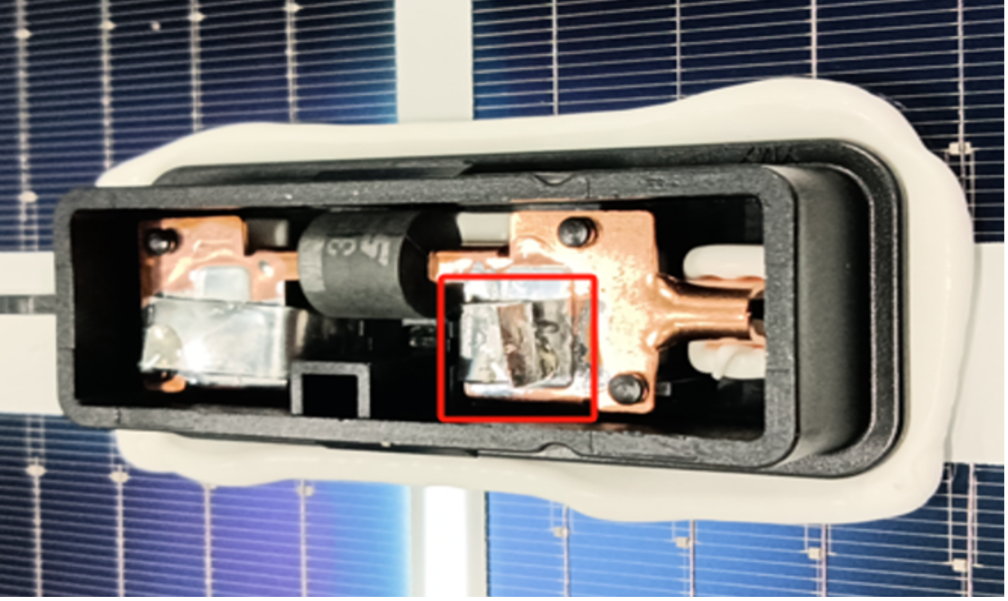
Across recent projects, an inflection point commonly appears as module operating current approaches the upper range associated with module-level junction boxes and bypass diodes. Once current rises to that level, the downstream DC design has less room to maneuver.
Higher current increases resistive losses and thermal loading, which pushes projects toward heavier conductors and higher-rated DC components. Whether strings are combined in stand-alone combiner boxes, inverter-integrated combiners, or run directly to inverter inputs, current still drives these sizing decisions. As current rises, equipment options narrow and late-stage substitutions become more likely.
Cable sizing follows the same pattern. Higher current requires thicker DC cables to manage resistive losses and thermal limits. Thicker cables increase material cost, add weight, and complicate installation, with secondary effects on combiner layouts and inverter connections.
What makes these tradeoffs easy to miss is timing. Early module comparisons emphasize nameplate power and efficiency. Current-driven impacts emerge later, once electrical designs have hardened and substitutions carry schedule risk. At that stage, teams often accept higher-rated components to avoid redesign, even when those choices erode part of the original cost advantage. Formats that remain within the operating range of widely deployed electrical components tend to preserve flexibility as projects move from design into procurement, reducing the likelihood of cost surprises.
How physical dimensions translate into mechanical risk
Mechanical considerations typically enter once teams move beyond electrical compatibility and begin evaluating how a module behaves under real-world loading. At that stage, overall dimensions matter as much as weight.
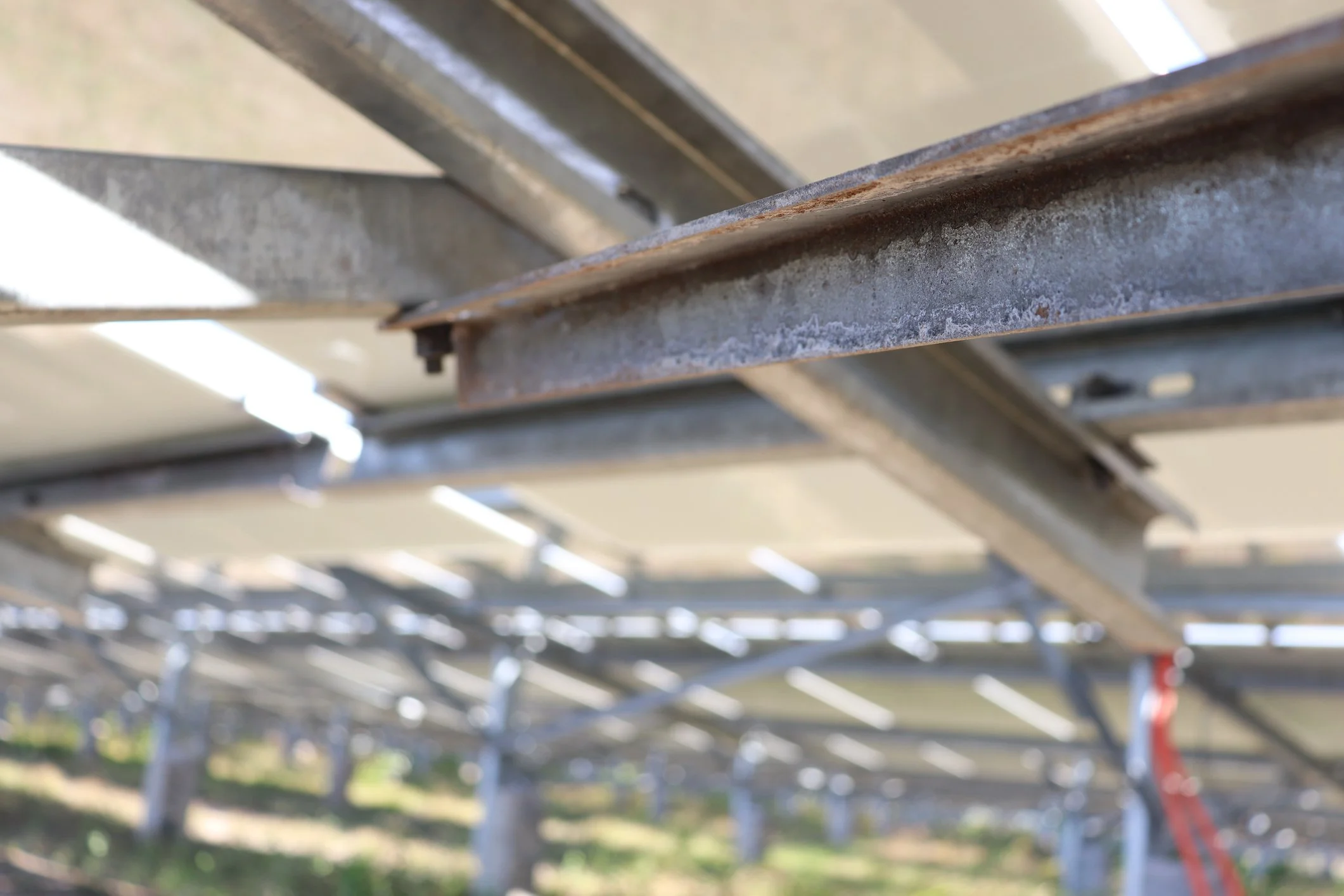
Longer and wider modules alter how loads distribute across tracker rows, particularly under wind and snow conditions. Even modest increases in span can shift bending moments at mounting points and frames. Formats near the upper edge of size envelopes often require additional reinforcement to meet load requirements, especially in regions with higher wind exposure or snow accumulation. Those reinforcements may appear minor in isolation. In practice, they influence procurement options, installation procedures, and certification pathways. Heavier or stiffer assemblies can require different handling methods, introduce new lifting considerations, or trigger additional structural review.
Tracker compatibility also becomes more sensitive as module dimensions grow. Many tracker designs evolved around familiar module envelopes, and while they can accommodate a range of sizes, performance margins narrow as modules extend further from those baselines. Systems may technically support a larger format, but often under tighter operating constraints or reduced safety margins. Mechanical penalties tend to accumulate quickly once dimensions push beyond established norms. Formats that remain closer to familiar envelopes generally simplify engineering review and reduce uncertainty as projects move from design into construction.
How shipping and packaging quietly shape project economics
Logistics constraints often determine whether a module format scales efficiently across large projects, even though those effects are rarely captured in early pro forma models.
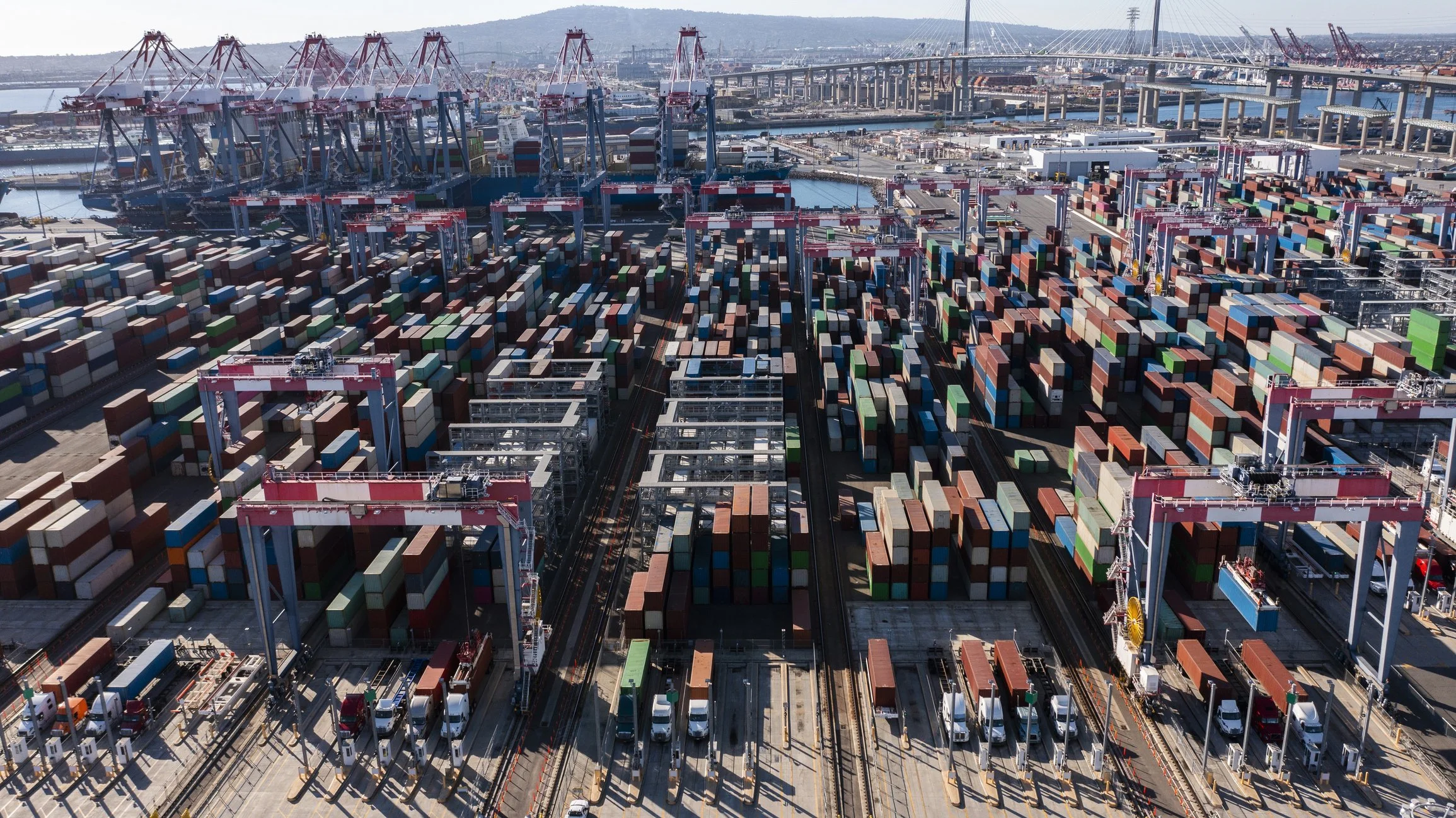
Standard container packing provides a stable baseline. Modules that fit efficiently into standard 40-foot containers move through ports, warehouses, and job sites with predictable cost and handling requirements. Packing density remains high, handling steps stay familiar, and shipping costs scale in a relatively linear way as volumes increase.
Formats that rely on alternative packing approaches change that equation. Vertical packing reduces the number of modules per container and introduces additional handling steps, increasing labor exposure and damage risk. At small volumes, these differences can appear marginal. At scale, they become material. For example, a shift that reduces container loading by even a few dozen modules can translate into several additional containers across a 200-MW project, with corresponding increases in freight, handling, and site coordination.
Logistics-related penalties are easy to underestimate because they sit outside module pricing. They surface as higher freight costs, longer unloading times, and more constrained site staging, often alongside electrical and mechanical adjustments already underway. Formats aligned with established shipping envelopes tend to preserve flexibility during procurement and construction. As projects scale, the ability to move modules through the supply chain with fewer exceptions often outweighs incremental gains in nameplate power.
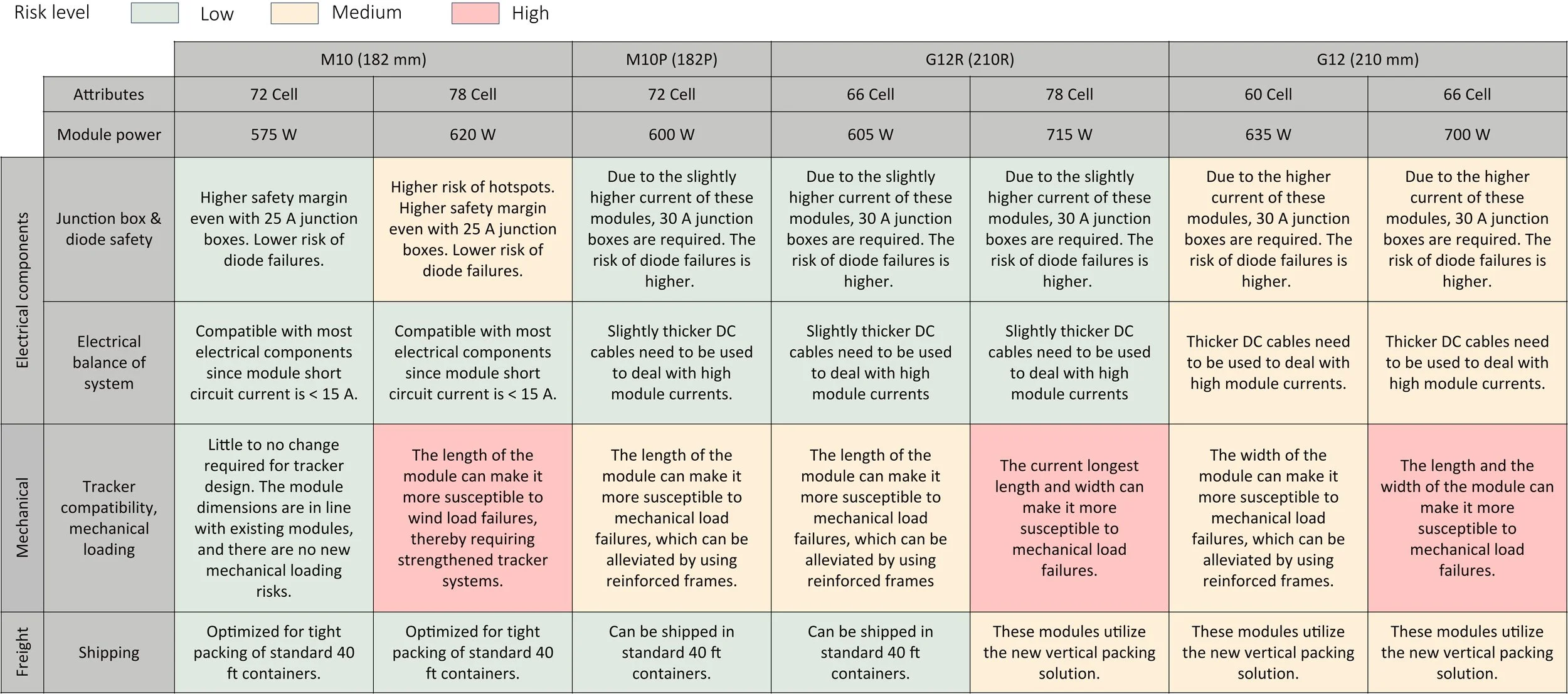
Industry transitions to G12R rectangular dimensions as main offering. Balance of power output, electrical components, and shipping are the key reasons.
Why G12R increasingly aligns with system constraints
When teams compare today’s dominant module formats that result from these wafer choices, differences in power output often draw initial attention. The comparison becomes more useful when framed around where each format introduces downstream penalties.
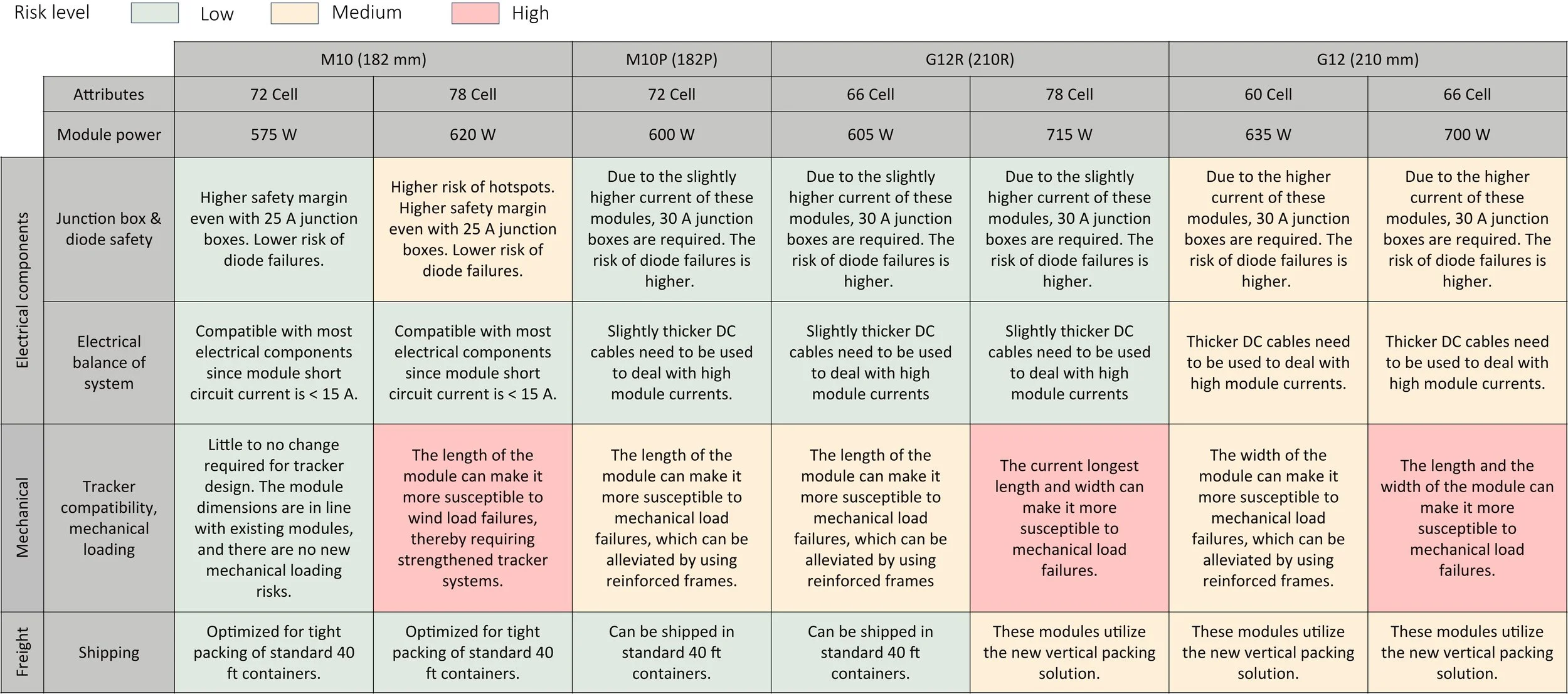
Smaller formats based on earlier square wafer sizes (182 × 182 mm) generally sit comfortably within established electrical and mechanical boundaries. Operating current remains within ranges supported by widely used junction boxes and cabling, tracker compatibility stays straightforward, and shipping efficiency remains high. The tradeoff is lower power per module, which increases module count and places pressure on labor and balance-of-system costs.
Rectangular wafer designs that retain similar cell counts to conventional formats raise module power without fundamentally changing system architecture. In practice, products based on rectangular wafers such as 191 × 182 mm or 199 × 182 mm often result in modules with comparable external dimensions, operating current, and wattage. While these designs increase power density relative to smaller square wafers, they do not materially alter module voltage or the number of modules that can be placed on a DC string. As a result, balance-of-system implications tend to resemble those of conventional formats, limiting their ability to deliver system-level cost reductions.
Large square-wafer formats (210 × 210 mm) push power further, but introduce penalties across multiple categories. Higher operating current drives the need for higher-rated junction boxes and thicker cabling. Increased width and length amplify mechanical loading and reduce tracker margins, sometimes requiring reinforced frames or structural upgrades. Shipping efficiency declines as modules require alternative packing approaches, increasing handling complexity and freight cost.
G12R differs from other rectangular designs not because of external module dimensions, but because of cell count. G12R modules are based on rectangular cells derived from a 210 × 182 mm wafer format (also written as 182 × 210 mm). By using fewer cells within a similar module footprint, G12R lowers module operating voltage, allowing more modules to be placed on a single DC string.
That increase in module count per string raises total string power without proportionally increasing current, which can reduce cabling, inverter, and installation costs on a per-watt basis. In this way, G12R captures much of the power benefit associated with larger wafers while avoiding many of the electrical, mechanical, and logistical penalties that accompany large square-wafer formats. This positioning does not make G12R universally optimal. It explains why it increasingly appears in project specifications. When teams evaluate module formats through combined electrical, mechanical, and logistics constraints, G12R tends to minimize the number of compensating design changes required downstream.
What convergence signals about project economics
In utility-scale solar, module dimension choices increasingly reflect a system-level calculus. Formats that require repeated accommodations across electrical design, structural engineering, logistics, and construction workflows tend to raise total project cost, even when individual adjustments appear manageable.
The growing preference for G12R reflects that reality. Its adoption does not suggest that other formats lack merit, but that many projects now prioritize predictability, compatibility, and cost control over maximizing any single performance metric. As projects scale and margins tighten, formats that limit cascading design changes tend to prevail.
Huatian Xu is Director of Technology and Quality at Intertek CEA, which helps buyers and long-term owners of solar and energy storage equipment buy the right products and ensure they are properly manufactured and installed.