US Policy Tests PV Adaptability
When the Inflation Reduction Act (IRA) became law in 2022, it provided ample runway for developers and manufacturers in the United States to expand. That was reversed by the One Big Beautiful Bill Act (OBBBA) in 2025, alongside a stream of trade countermeasures and executive orders. Intertek CEA’s Dan Shreve writes that in all instances, the industry has responded by maximizing the impact of what support remains from the IRA and taking advantage of fine print wherever possible.
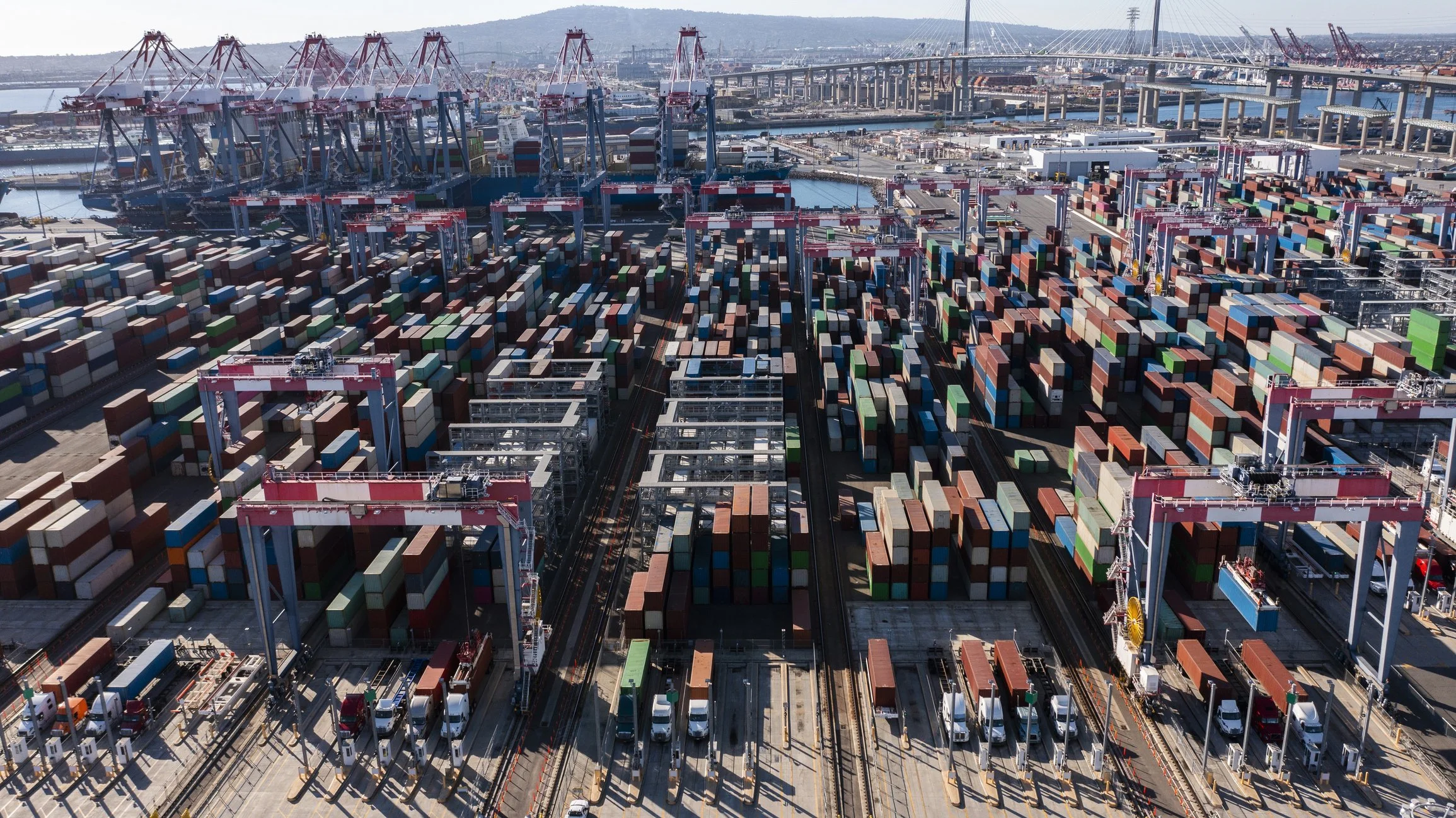
US trade policy has increasingly targeted solar imports, while new rules still to be finalized could lock out even more power equipment from overseas.
US President Donald Trump signed the OBBBA into law in 2025, shortening the time frame during which solar developers could access the Section 48E investment tax credit (ITC) and restricting access to those credits by foreign entities of concern (FEOC). Developers responded with a six-month, 200 GW safe-harbor blitz through 2025, avoiding FEOC regulations and laying the foundation for ITC-enabled installations through the end of the decade.
Post-IRA, suppliers eschewed investment in long-lead, capital-intensive upstream component supply and instead focused on expanding domestic module production to maximize the impact of the $0.07/W Section 45X tax credit. Developers needed domestic modules to satisfy the Section 48/48E ITC domestic content bonus (DCB), but premium pricing drove a blending strategy instead, procuring domestic modules alongside low-cost imported PV modules to meet DCB thresholds and maintain project return on investment (ROI).
Auxin Solar filed a request in 2022 for an anti-circumvention ruling against four Southeast Asian (SEA) nations. Developers saw a potential supply disruption, but successfully lobbied for a two-year moratorium on the duties. As a result, SEA module imports grew to more than 3 GW per month in 2023, rising above 5 GW per month by the end of the first half of 2024. The Auxin case laid the groundwork for what is now a routine process of initiating new AD/CVD and anti-circumvention investigations.
The Solar 3 AD/CVD investigation, initiated in May 2024, resulted in duties ranging from 34% to 652% on imported cells and modules from Cambodia, Malaysia, Thailand, and Vietnam. Foreign producers pressed on, dismantling affected facilities and relocating to non-AD/CVD countries, embarking on a nomadic journey that has since prompted Solar 4 (India, Laos, and Indonesia) and a second investigation against Ethiopia.
US solar developers and their suppliers have shown genuine resolve, but weary market participants will need a second wind to overcome the latest challenges. As of September 2026, the US solar market has been subject to an FCC foreign inverter ban, Section 232 tariff on polysilicon and polysilicon derivatives, and an upcoming ban on certain foreign-made equipment for bulk-power systems.
Workarounds available
Recent clarifications around the FCC inverter ban have quelled nerves for some. At the root of the relief is an allowance for Section 45X PTC-qualified inverters, as well as the continued use of existing models with prior FCC authorization.
This is deemed low risk, given the industry’s ability to rapidly expand low-risk, low-capital production capacity. Intertek CEA’s latest US PV and BESS Inverter Report estimates that online and announced US inverter production capacities total 85 GW, matching the combined demand in PV and BESS markets in 2028.
The Bulk Power System Executive Order 14420 (BPS EO) seeks to restrict or eliminate imports of critical power equipment from certain foreign nations. The language in the order is vague, leaving PV modules out of the list of named equipment types, but subsequently allows for the Department of Energy (DOE) to widen the scope of the order to consider “other supply chain dependencies that could present an unacceptable risk to the bulk-power system.”
This is a moderate risk, as substantive guidance may not emerge until the end of 2026. The US solar market has already adjusted to OBBBA FEOC rules, so fears of demand destruction may be overwrought, as high-voltage equipment is typically not supplied from China in substantial quantities. Large power transformers from China account for around 2% of total US imports by value from 2025 to present. Switchgear supply from China is slightly higher at around 8%. Exports from the remaining named countries are negligible.
Higher risk
The US solar market has grown accustomed to trade actions from the Trump administration. It was therefore surprising that the market shuddered when the new Minimum Import Price (MIP) and Ad Valorem Tariff (AVT) framework was released. Spot pricing has since skyrocketed, with most supply options north of $0.40/W and full domestic value chain prices exceeding $0.50/W.
This is deemed higher risk because the price floor for all supply options has moved upward. Nevertheless, Intertek CEA believes workarounds exist that will enable pricing to recover to $0.34/W to $0.38/W, and limit demand destruction to marginal PV projects.
Companies with domestic cell and/or module production and overseas cell and/or wafer production have an advantage. MIPs exceed the established import prices in non-AD/CVD-impacted countries, enabling overseas companies to achieve high margins. An integrated company can offset a zero-margin US domestic module sale with higher revenue from its overseas cell facility. This option could boost profits for integrated manufacturers by $0.02/W compared to pre-Section 232 pricing.
The guiding principle for margin sharing remains the same under this option, but the mechanism has changed and now involves two unrelated parties. Here, the module maker purchases imported cells at the MIP, and the cell maker pays the module maker a nominal processing fee leveraging the Section 45X PTC. The key difference in this scenario is that the overseas cell maker buys the module and then sells it to a US developer. Pricing at mid-$0.30/W is feasible, perhaps even lower.
Section 232 is intended to promote the growth of the US polysilicon sector by providing trade protection against lower-cost overseas producers. It does not provide a meaningful demand-side driver for that polysilicon. US polysilicon is in short supply, with Intertek CEA estimating current annual capacity at 7 GW to 14 GW. An exceedingly rare win-win could emerge between US developers, suppliers, and government officials if a process could be nailed down that satisfies UFLPA obligations, lowers MIP exposure, and creates a stronger driver for the expansion of US polysilicon production.
Dan Shreve, VP for market intelligence at Intertek CEA, has more than 20 years of experience in the power and renewables industry and has held senior executive roles at consultancy Wood Mackenzie and General Electric’s GE Renewables business. An authority on power market decarbonization and clean energy, Shreve holds an MBA from the University of New York and a BSc in mechanical engineering from Worcester Polytechnic Institute.